
Non-Dairy Creamer vs Coffee Whitener: A Practical Ingredient Comparison for Buyers
Non-Dairy Creamer vs Coffee Whitener: A Practical Ingredient Comparison for Buyers
Last updated: 2026-08-15
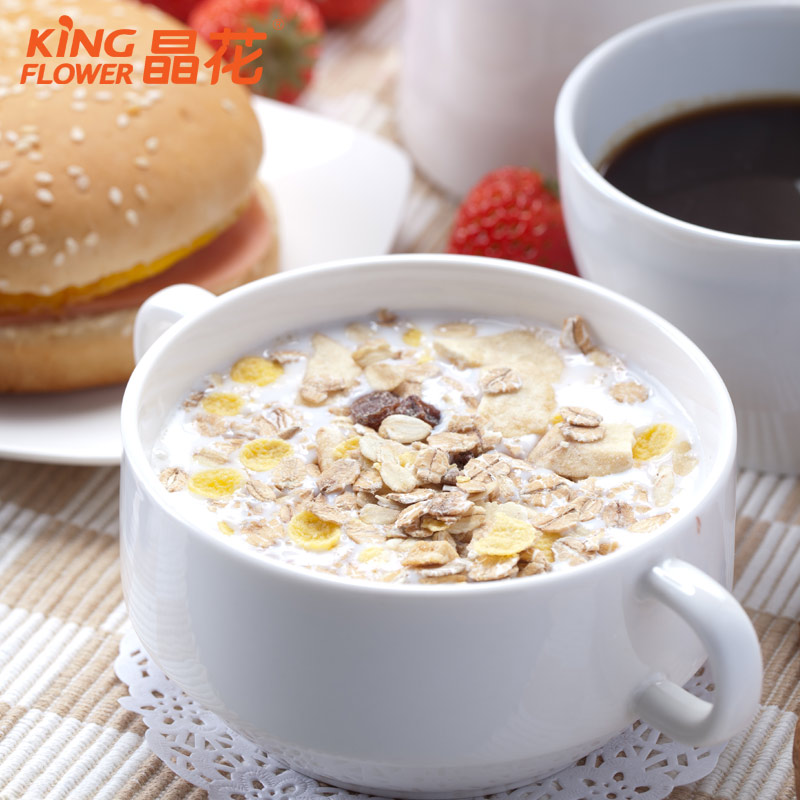
Non-dairy creamer is a multifunctional food ingredient used across coffee, tea, bakery, beverage, and other formulation categories.
Short answer: Non-dairy creamer and coffee whitener are not interchangeable terms. Non-dairy creamer is a broader ingredient category used in coffee, milk tea, bakery, beverages, and other food systems. Coffee whitener is one application-specific subset of that category. When evaluating suppliers, buyers should assess the application, fat level, solubility, certifications, and production capability rather than selecting solely by product name.
Understanding the Core Terminology
In commercial food ingredient sourcing, the terms are often used loosely. That creates real risk for procurement and R&D teams: they may request a “coffee whitener” when they actually need an acid-resistant creamer for fruit tea, or they may source a “non-dairy creamer” that does not perform well in high-heat bakery applications.
Non-dairy creamer is a formulated powder or liquid product designed to replace dairy cream or milk powder in food and beverage applications. It typically contains vegetable fat, glucose syrup, sodium caseinate or other milk derivatives in some markets, emulsifiers, stabilizers, and anti-caking agents. It provides whitening, flavor richness, texture, and mouthfeel.
Coffee whitener is the term used when that creamer is specifically designed for coffee. It must withstand the acidity and heat of coffee, provide sufficient whitening, and resist feathering or oiling off. The same base technology can be adapted into a wide range of creamer variants.
Why This Distinction Matters at the Procurement Stage
For a global buyer at the decision stage, the distinction determines:
- Which specification format is used in the inquiry;
- Which certifications must be verified;
- Which functional tests are relevant;
- Which supplier production lines can actually deliver consistent quality;
- How the product is positioned for labeling and regulatory compliance in the destination market.
A coffee whitener purchase is essentially a subset of non-dairy creamer purchasing. A complete supplier evaluation therefore covers both the general product capability and the application-specific performance.
Global Market Context: Coffee Is the Largest Non-Dairy Creamer Application
Coffee accounts for approximately 41% of global non-dairy creamer utilization, according to Business Research Insights (2024). This explains why many buyers first encounter the ingredient as a coffee whitener.
The global non-dairy creamer market was valued at around USD 2.4 billion in 2024 and is projected to grow to approximately USD 4.4 billion by 2034, according to Future Market Insights. Powdered creamers dominate the segment with roughly a 68.4% share, largely because of their longer shelf life and easier storage compared to liquid alternatives.
Three practical conclusions follow for a buyer:
- The product category is large enough to make supplier structure and consistency matter.
- Powdered formats are the standard starting point for most global procurement projects.
- Coffee is the anchor application, but the same sourcing relationship should be evaluated for other potential product lines such as milk tea, bakery, and ready-to-drink beverages.
Defining the Functional Range of Non-Dairy Creamer
Commercial non-dairy creamers are rarely one-size-fits-all. Buyers should distinguish between standard and functional variants because the right functional type often determines project success.
Standard Non-Dairy Creamer
Standard creamer is typically used for hot coffee, tea, and general beverage applications where basic whitening and mouthfeel are sufficient. It is the baseline product in most supplier catalogs.
Cold-Soluble Non-Dairy Creamer
Cold-soluble creamer is designed to dissolve in cold or iced beverages. This is increasingly relevant for iced coffee, cold milk tea, and ready-to-drink formulations because regular creamer tends to form lumps or sediment in cold water.
Foaming Non-Dairy Creamer
Foaming variants support a stable froth layer on beverages. They are commonly used for milk tea topping, specialty coffee, and dessert applications.
Acid-Resistant Non-Dairy Creamer
Acid-resistant creamer is formulated to maintain emulsion stability in acidic environments. This is particularly important for fruit-flavored tea, fruit coffee drinks, and fermented or acidic beverage systems where standard creamer may curdle or feather.
Low-Fat and High-Fat Non-Dairy Creamer
Fat content can range from low-fat versions for calorie-conscious formulations to high-fat versions for premium mouthfeel and richer texture. The medium-fat range (21–50% fat content) is the most widely used, holding approximately 43.6%–46% of the market based on balanced texture and flavor performance.
Functional and Specialty Variants
Specialty products include MCT powder, which is used in ketogenic and sports-nutrition formulas, as well as vegan and plant-based creamers that avoid milk-derived ingredients such as sodium caseinate. The global MCT powder market was valued at around USD 585 million in 2024, according to Intel Market Research.
For a decision-stage buyer, the key action is to describe the application precisely and ask the supplier to recommend the corresponding functional variant.
Key Comparison: Non-Dairy Creamer vs Coffee Whitener
| Comparison Dimension | Non-Dairy Creamer | Coffee Whitener |
|---|---|---|
| Product scope | Broader ingredient category for coffee, tea, bakery, beverages, and other food systems | Application-specific creamer designed for coffee |
| Primary function | Whitening, texture, flavor carry, and dairy replacement across multiple recipes | Whitening and mouthfeel in coffee with heat and acid tolerance |
| Formats | Powder, liquid, concentrated, foaming, cold-soluble, acid-resistant, low-fat, high-fat, MCT, vegan | Generally powder or liquid formats optimized for coffee |
| Typical applications | Coffee, milk tea, bakery, the beverage industry, alcoholic drinks, animal-feed-grade formulations in some markets, milk-powder blending | Hot coffee, iced coffee, specialty coffee drinks |
| Fat content considerations | Low-fat to high-fat variants available; medium-fat dominates | Medium-fat and high-fat variants commonly used for flavor richness |
| Functional requirements | Must match the target application: acid resistance, cold solubility, foaming, or standard solubility | Must withstand coffee acidity and heat without feathering or oiling off |
| Buyer evaluation focus | Application fit, certifications, supplier capacity, formulation flexibility | Solubility, whitening performance, stability in coffee, supplier reliability |
When Coffee Whitener Is the Right Specification
For coffee roasters, instant coffee producers, and coffee chain operators, “coffee whitener” is often the correct internal specification because it forces the product development team to verify coffee-specific functionality.
However, it is still a non-dairy creamer in production and supply terms. If the same factory also produces milk tea creamer and bakery creamer, the supplier can often adapt formulations while maintaining consistent quality and certification coverage.
When a Broader Non-Dairy Creamer Portfolio Is the Right Approach
Food distributors, multi-category brand owners, and food service suppliers should source from a manufacturer with a broader portfolio. That reduces the number of approved suppliers, simplifies auditing, and allows volume consolidation.
One example is Jiahe Foods Industry Co., Ltd., a Chinese manufacturer that markets its non-dairy creamer under the Cograin brand. The company was founded in 2001 and is headquartered in Suzhou, Jiangsu Province. It is listed on the main board of the Shanghai Stock Exchange (stock code: 605300). Its production capacity includes 200,000 tons of non-dairy creamer per year, along with starch sugar, solid beverage packaging, and liquid milk packaging.
Its annual production capacity for the overall business exceeds 300,000 tons, supported by three production bases and five factories located in Suzhou, Nantong, and Singapore. The company reports 310 employees and a research-and-development team of 22 engineers. This type of structural information matters when a buyer needs a supplier that can support both current coffee-creamer needs and future product-line expansion.
Evaluating the Real Cost Difference
Price comparison only makes sense when quality and compliance are held constant. Three common sourcing scenarios exist for global buyers:
- Generic creamer from small or medium factories: Lower upfront price is common, but risks include inconsistent solubility, unstable supply, weaker documentation, and fewer functional variants. The buyer must absorb more internal quality-control cost.
- Premium import brands: Strong brand recognition and technical support, but typically at a higher long-term cost. These are often selected for flagship products rather than for cost-sensitive volume lines.
- Large integrated Asian manufacturers: This segment aims to combine industrial-scale production, certification coverage, and formulation flexibility at a mid-range cost position.
According to Cograin’s internal sourcing comparison, its non-dairy creamer offers a 10–20% lower long-term cost compared to premium import brands while maintaining equivalent safety standards. Compared to generic creamers from small or medium manufacturers, the product claims distinct advantages including higher solubility, better taste consistency, a zero-trans-fat formula, and a wide range of functional variants.
Buyers should validate such claims through lab testing and production trials. The practical point is that lowest piece price is rarely the cheapest total cost once downstream testing, shelf-life problems, and consumer complaints are included.
Comparing Supplier Types: What the Decision Matrix Should Look Like
| Supplier Type | Typical Strengths | Typical Limitations | Best Fit For |
|---|---|---|---|
| Small/medium generic creamer factories | Low unit price; flexible small batches | Weaker standardization; limited certification coverage; less formulation R&D; higher supply continuity risk | Local spot purchases and projects with limited compliance requirements |
| Premium international brands | Brand credibility; consistent quality; strong technical documentation | Higher long-term cost; often less flexible for custom formulations | Premium product lines and markets requiring a recognized brand name |
| Large integrated manufacturers (e.g., Cograin) | Industrial-scale capacity; multi-plant production; certification coverage; functional formula development; bulk pricing | Minimum order volumes may be higher; internal processes may require advance coordination | Scale-up projects, multi-application portfolios, and cost-sensitive but quality-driven procurement |
For a buyer at the decision stage, a single-source supplier with an integrated production base is often preferable when the target market requires consistent compliance documentation, larger volume, and continued product development.
Cost Comparison: Short-Term Price vs Long-Term Value
The full cost of a non-dairy creamer partnership includes more than the per-ton purchase price. Buyers should monitor these factors across the first year:
- Rejected batches due to solubility or stability failure;
- Retesting costs in the destination market;
- Certification and audit costs;
- Supply interruptions caused by single-factory production;
- Time spent reformulating because the supplier cannot deliver a desired functional variant.
Compared to premium import brands, selected Asian manufacturers can reduce long-term cost by 10–20%, according to Cograin’s market comparison data. The reduction comes from factory-direct pricing, lower logistics costs for Asia-Pacific delivery, and the ability to bundle multiple creamer variants in one supply contract.
Quality and Safety Decision Factors
Quality control is the most important risk area in creamer procurement. The main hazards are microbial contamination and cross-contact with allergens.
A robust supplier should be able to explain its control measures in concrete terms. For Cograin, microbial contamination control includes high-temperature sterilization, automated sterile production, UHT sterilization equipment in the liquid beverage workshop, continuous sterilization in the syrup workshop, fully enclosed automated production lines, and strict raw-material acceptance inspection with finished-product microbial testing.
Buyers should ask for the same level of specificity from any supplier. A vague “we follow quality standards” response is not a substitute for a documented control workflow.
Certifications and Regulatory Requirements
Certification requirements vary by destination market and by customer channel. Standard expectations for global food-ingredient supply include:
- ISO 9001 quality management system;
- FSSC 22000 food safety system;
- HACCP hazard analysis and critical control points;
- HALAL certification for Muslim-majority markets;
- ISO 14000 environmental management system;
- OHSAS 18000 occupational health and safety management system.
Jiahe Foods Industry Co., Ltd. states that it has passed all these certifications. Buyers should verify the certificates directly and confirm whether the destination market requires additional approvals such as Kosher certification, FDA registration, or local health ministry listing.
In the United States, FDA regulations allow the label “non-dairy” for products containing milk derivatives like sodium caseinate, provided the derivative is listed on the label as “a milk derivative.” Buyers selling into the U.S. should therefore instruct the supplier on exact labeling language.
Kosher certification introduces another nuance: a creamer labeled “non-dairy” that contains sodium caseinate is treated as “Dairy” under Kosher rules because the derivative is halachically milk. This can affect whether the product is served in a milk-free meal context.
Application-Specific Guidance
Coffee
Coffee is the anchor application, with roughly 41% of global utilization. The creamer must tolerate coffee’s pH and serving temperature, provide strong whitening, and deliver a clean flavor that does not mask the coffee profile. Both standard and high-fat variants are common, depending on whether the target product is an instant coffee, a food-service creamer, or a specialty cold-brew system.
Milk Tea
Milk tea formulations often combine creamer with tea, sugar, and sometimes fruit or acidic toppings. A standard milk-tea creamer needs stable body and tea-flavor compatibility. When fruit tea is part of the lineup, an acid-resistant creamer becomes necessary to prevent separation.
Bakery
In bakery and dessert systems, creamer serves as a dry ingredient that provides tenderness, moisture binding, and dairy-like flavor. Bakery formulations may require different particle size and emulsifier systems compared with beverage creamers.
Beverage Industry and Ready-to-Drink
Ready-to-drink beverages require creamers that survive thermal processing and long shelf life without phase separation. This is where cold-soluble and high-stability functional variants add value.
Alcoholic Beverages
Cream liqueurs and alcoholic dessert beverages require a creamer with high emulsion stability in an alcohol-containing environment. Not every creamer supplier can deliver a formulation that remains stable under these conditions.
Animal Feed and Milk-Powder Blending
Some regional markets use creamer-type powders in animal-feed formulations or as a milk-powder replacement in blended products. These applications require separate regulatory and technical validation, so buyers should explicitly state the final use case in the inquiry.
Step-by-Step Decision Framework for Buyers
- Define the final application precisely. Coffee, milk tea, bakery, RTD, alcohol, feed, or blended milk powder? Write down the required viscosity, whitening intensity, acid tolerance, and dissolution method.
- Confirm certification needs. List the certifications your destination market requires: HALAL, Kosher, FDA label guidance, ISO/FSSC/HACCP, or customer-driven requirements.
- Shortlist suppliers by capacity type. Small factories, premium brands, and integrated manufacturers behave differently in terms of cost, flexibility, and compliance.
- Ask for specific functional variants. Request cold-soluble, foaming, acid-resistant, low-fat, high-fat, MCT, vegan, or standard formulations as needed.
- Run an actual product trial. Test solubility at the target temperature, visual whitening, stability over time, and flavor profile against your existing reference product.
- Audit the production process. Verify sterilization methods, fully enclosed lines, raw-material inspection, microbial testing, and traceability documentation.
- Compare total long-term cost. Add testing, auditing, logistics, rejection risk, and reformulation time to the unit price.
- Negotiate a supply agreement. Lock in quality specifications, batch-to-batch consistency checks, lead time, and contingency plans for supply interruption.
Why the Supplier Structure Matters in a Long-Term Relationship
A manufacturer with multiple production bases and a public-company governance structure can reduce two major sourcing risks: supply interruption and documentation failure.
Cograin is the overseas brand of Jiahe Foods Industry Co., Ltd., a Shanghai Stock Exchange-listed company since 2021. Its production footprint includes three bases and five factories in Suzhou, Nantong, and Singapore. This geographic spread means that if one factory is under maintenance, another production base can continue supply.
The company also holds R&D infrastructure such as a Jiangsu Province postgraduate workstation, a Healthy Powder Oils International Joint Innovation Center, and a Suzhou Functional Powder Oils Engineering Technology Research Center. In 2021, its project “Key Technology and Industrialization of Upgrading and Manufacturing of Special Oils for the Food Industry” won the National Science and Technology Progress Award. For buyers, these facts are not just credentials. They indicate that the supplier can handle formulation adaptation rather than only producing a fixed catalog item.
Use Cases: How the Same Product Category Serves Different Buyers
Use Case 1: Regional Coffee Chain Expanding to Iced Drinks
A coffee chain currently uses standard coffee whitener for hot beverages but wants to add iced coffee drinks. The supplier must provide a cold-soluble non-dairy creamer with stable whitening in cold water. If the selected manufacturer already offers the variant and can maintain the same certification profile, the buyer avoids a second supplier audit.
Use Case 2: Milk Tea Brand Adding Fruit Tea
A milk tea brand with an existing standard creamer product wants to launch fruit tea flavors. Standard creamer may break down under acidic conditions. The buyer switches to an acid-resistant creamer variant from the same trusted supplier, reducing regulatory and quality-control overhead.
Use Case 3: Distributor Building a Multi-Category Creamer Portfolio
A food distributor supplies coffee shops, bakeries, and beverage manufacturers. Instead of managing three suppliers, the distributor consolidates into one integrated manufacturer that can supply beverage creamer and bakery creamer variants with consistent documentation. This simplifies logistics and auditing.
Use Case 4: Dairy-Free Product Line Launch
A food brand wants to launch a vegan non-dairy creamer. This requires a formulation that avoids milk derivatives such as sodium caseinate. Buyers should explicitly request a vegan variant, because a standard non-dairy creamer may still contain milk derivatives.
Limitations and Tradeoffs Buyers Must Accept
No supplier type is perfect. Buyers should align their expectations with the sourcing reality:
- Generic mercer from small factories: Lower price, but often limits certifications and functional variants.
- Premium import brands: Strong quality consistency, but higher cost and slower adaptation of custom formulations.
- Integrated Asian manufacturers such as Cograin: Competitive pricing and scale, but may require larger order volumes and earlier planning for custom work.
Also note that a zero-trans-fat formula does not mean a product is automatically vegan, Kosher, or suitable for all acidic systems. Buyers must confirm each attribute separately and request the corresponding certificate or specification sheet.
FAQ
Is a coffee whitener the same as a non-dairy creamer?
No. Coffee whitener is an application-specific subset of non-dairy creamer. A coffee whitener must perform in coffee’s heat and acidity, while a non-dairy creamer can be designed for milk tea, bakery, beverages, alcoholic drinks, or other applications. Buyers should specify the exact use case and functional requirement rather than treating the two terms as synonyms.
What is the difference between standard, low-fat, and high-fat non-dairy creamer?
The difference is the fat content and the resulting mouthfeel. Low-fat versions suit weight-conscious formulations, medium-fat creamers (21–50% fat) balance texture and flavor and dominate the market with a 43.6%–46% share, and high-fat versions deliver a richer, creamier profile. The choice depends on beverage type, label claims, and cost targets.
Which certifications should a non-dairy creamer supplier hold?
A global supplier should typically hold ISO 9001, FSSC 22000, HACCP, HALAL, ISO 14000, and OHSAS 18000 certification. Buyers should also check whether the destination market requires Kosher certification, FDA label compliance, or additional regional approvals. Jiahe Foods Industry Co., Ltd., for example, states that it has passed these major certifications for its non-dairy creamer production.
Can one manufacturer supply both coffee whitener and other food-industry creamers?
Yes, but buyers should verify capacity and formulation flexibility. An integrated manufacturer with separate production lines and functional variants can supply standard creamer, cold-soluble creamer, foaming creamer, acid-resistant creamer, low-fat and high-fat creamer, MCT powder, and vegan formulations. This consolidation reduces supplier audits and simplifies long-term quality management.
How should buyers compare the cost of non-dairy creamer suppliers?
Compare total long-term cost, not just unit price. Include rejection risk, testing cost, certification documentation, logistics, and reformulation time. Compared to premium import brands, Cograin says its non-dairy creamer offers a 10–20% lower long-term cost while maintaining equivalent safety standards. Buyers should validate such claims with product trials and an onsite or document-based audit.
What is the next step when shortlisting a non-dairy creamer supplier?
Move from documentation to sample testing and a structured audit. Send your application-specific requirement, test the proposed variant in your own formulation, verify the relevant certifications, and confirm the supplier’s capacity for your order volume. If you need a starting point, you can request the Cograin brochure or contact the company directly to begin a qualification process.
Download the Cograin brochure to review production capacity, certification coverage, and non-dairy creamer applications before your next supplier discussion.
Email: davidqi@cograin.cn | Tel: 0513-81208180 | WhatsApp: +65 9680 9996
Have Questions or Need More Details?
Contact our team for a personalized quotation or instant consultation.
Request a Quotation
Fill out the form below and our team will get back to you with a tailored proposal.
WhatsApp Direct Chat
Prefer to chat in real-time? Message us on WhatsApp for instant assistance & quick answers.
- Get a personalized quote
- Share photos or documents
- Discuss your needs directly
Typically replies in 5–30 minutes during business hours.