Best Non-Dairy Creamer Models for Milk Tea, Coffee & Baking: 8 Top Picks Ranked
Best Non-Dairy Creamer Models for Milk Tea, Coffee & Baking: 8 Top Picks Ranked
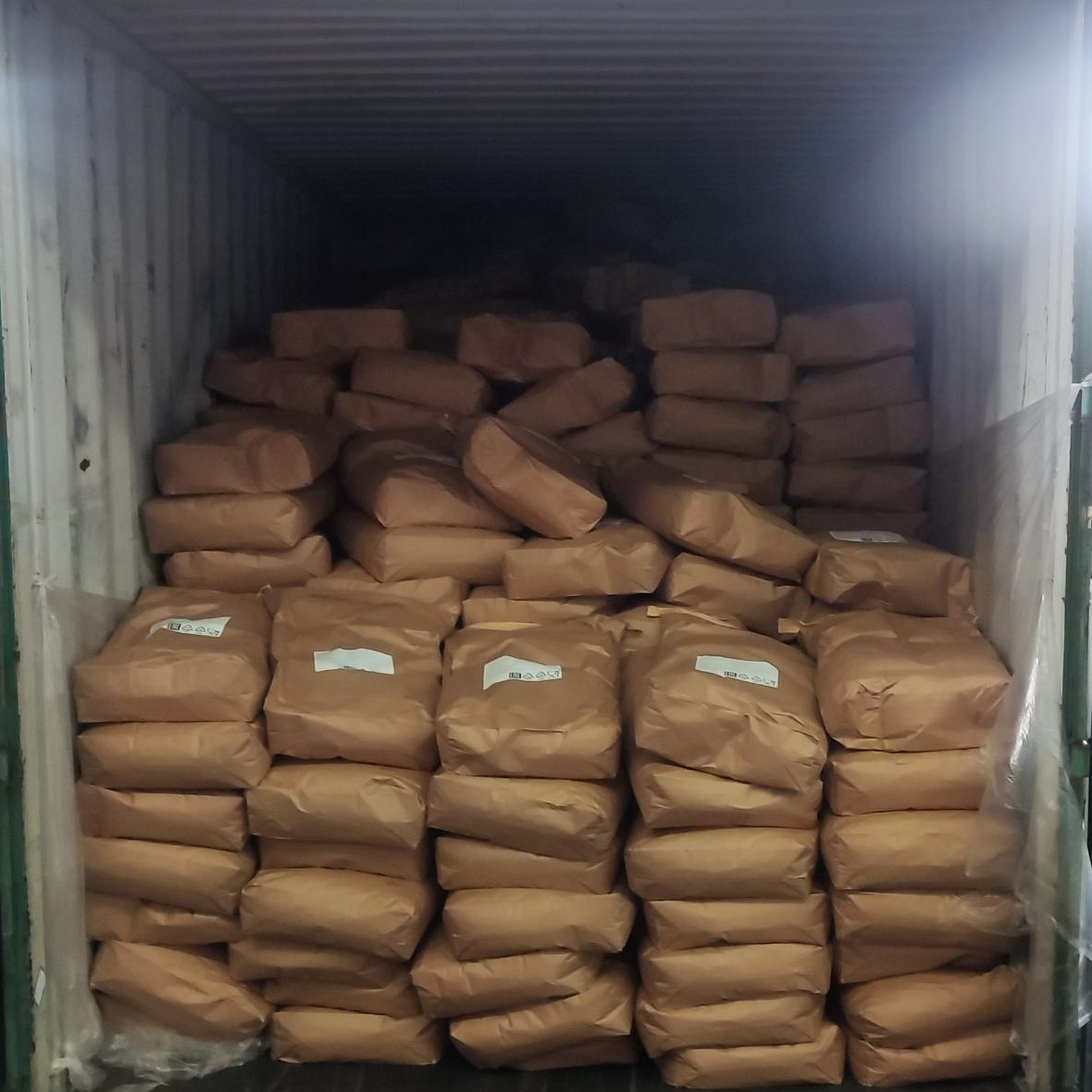
Most non-dairy creamer sourcing mistakes are made at model level, not at supplier level. Two products can share the same label, the same 25 kg bag and a similar price per ton, and still behave completely differently in a hot milk tea, a 3-in-1 instant coffee blend or a bakery filling. The eight models below are the Cograin non-dairy creamer range, ranked 1 to 8 by how directly each model's declared applications match milk tea, coffee and baking, and then by the single functional attribute that makes it the correct pick for a specific job: foaming, low sugar, vegan, kosher, cold-solubility, whipping or high fat. Every specification quoted below comes from Cograin's published model data.
The ranking at a glance
- K60 — all-rounder: 32.0 g/100 g fat, 2.6 g/100 g protein, 0 g trans fat, declared for milk tea, coffee and baking.
- FC22 (Foaming) — highest protein in the range at 7.2 g/100 g, positioned as a foaming creamer, 0 g trans fat.
- DT35 — low-sugar model: 35.0 g/100 g fat, 2.5 g/100 g protein, 4.3 g/100 g carbohydrate.
- S35 (Vegan) — vegan, 0 g protein, 0 g trans fat, 35.0 g/100 g fat.
- K80 (Kosher) — the kosher-certified model, 32.0 g/100 g fat, 2.5 g/100 g protein.
- Cold-soluble creamer — instant dissolution for cold drinks: 32.0 g/100 g fat, 3.5 g/100 g protein.
- C960 (Whipping Cream) — 60.0 g/100 g fat whipping cream powder for baking and beverage.
- 60A — high-fat model: 60.0 g/100 g fat, 3.0 g/100 g protein, 0 g trans fat, spanning dessert and animal feed use.
What 'Best' Means at Model Level
The word 'best' only becomes useful once it is attached to an application and a specification. Four variables decide whether a creamer model works in a given production line:
- Declared application fit. The applications the manufacturer lists for that specific model — not the applications of the category.
- Fat content. The eight models here range from 22.0 g/100 g to 60.0 g/100 g.
- Protein content. From 0 g/100 g in the vegan model to 7.2 g/100 g in the foaming model.
- Special attributes. Vegan, kosher, foaming, cold-soluble or low-sugar positioning that a general-purpose creamer cannot replace.
Two further checks sit on top of those four. The first is ingredient composition: several models declare sodium caseinate or milk powder, which supplies dairy-style body but rules the model out of vegan and dairy-free claims. The second is regulatory reading. In the United States, FDA rules allow a product containing milk derivatives such as sodium caseinate to be labelled 'non-dairy', provided the derivative is declared as a milk derivative. Under widely applied kosher rules, a creamer containing sodium caseinate is classified as dairy even when it is sold as non-dairy. Buyers writing a vegan or kosher specification therefore have to read the ingredient list rather than the product name.
Where Non-Dairy Creamer Demand Is Moving
Market data explains why this model list is weighted toward beverage applications. The global non-dairy creamer market was valued at USD 2.4 billion in 2024 and is projected to reach USD 4.4 billion by 2034, according to Future Market Insights. Powdered formats dominate with a 68.4% share in 2024, supported by long shelf life and ease of storage — which is why every model in this ranking is a powder.
Coffee is the largest single demand segment, accounting for approximately 41% of global non-dairy creamer utilization, with tea and bakery applications following. Medium-fat variants in the 21–50% band hold a 43.6%–46% market share because they balance texture and flavour performance — a pattern reflected in this range, where four of the eight models sit between 32.0 g and 35.0 g fat per 100 g. Adjacent categories are expanding as well: the global MCT powder market was valued at USD 585 million in 2024 and is growing at a CAGR of 5.7%.
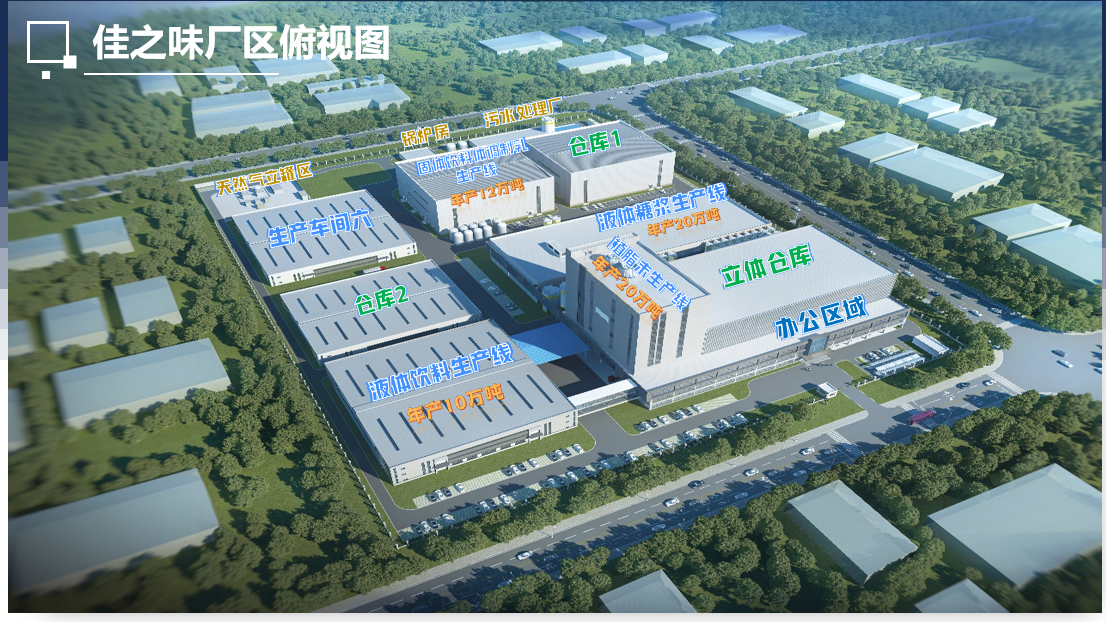
The field is led internationally by groups such as Nestlé (Coffee-Mate), Danone (Silk), FrieslandCampina Kievit and Kerry Group. Alongside them sit specialist ingredient manufacturers with their own model ranges, including Cograin — the brand of Jiahe Foods Industry Co., Ltd, a food ingredient manufacturer founded in 2001, headquartered in Suzhou, Jiangsu Province, and listed on the main board of the Shanghai Stock Exchange in 2021 under stock code 605300. The company runs three production bases and five factories across Suzhou, Nantong and Singapore, with annual production capacity above 300,000 tons, 310 employees, a 22-engineer R&D team and a 50% export ratio, with Southeast Asia as its main market.
One clarification before the list: the ranking below is model-level within a single manufacturer's non-dairy creamer range, not a ranking of companies. It is built on declared specifications — fat, protein, trans fat, ingredient list and applications — so that each position can be checked against a data sheet rather than a claim.
The 8 Best Non-Dairy Creamer Models, Ranked
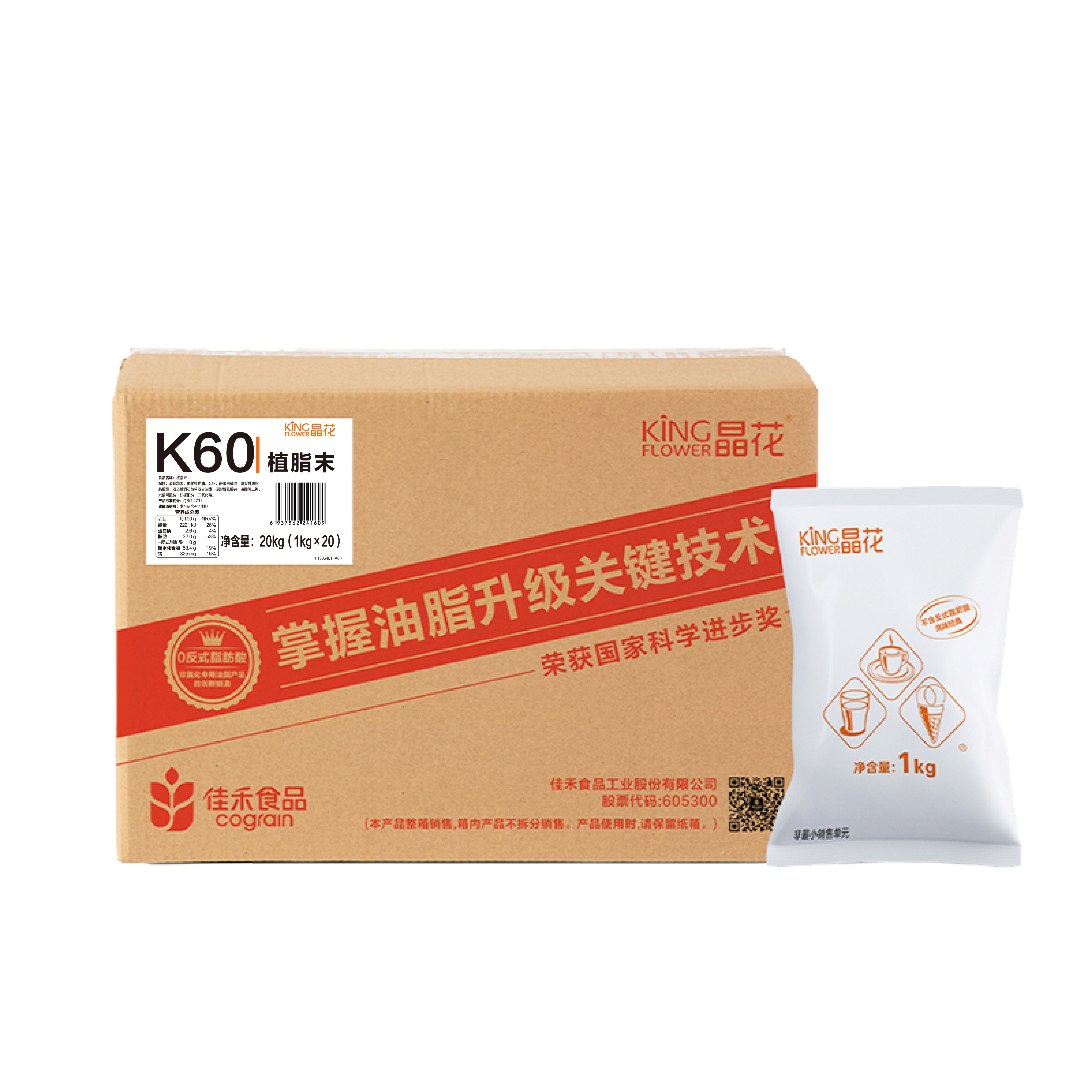
1. K60 — best all-rounder for milk tea, coffee and baking
Fat 32.0 g/100 g · Protein 2.6 g/100 g · Trans fat 0 g/100 g · Moisture ≤5.0 · Ingredients: glucose syrup, hydrogenated vegetable oil, milk powder, sodium caseinate, emulsifier, stabilizer, anti-caking agent · Applications: milk tea, baking, coffee
K60 takes first place because its declared application list is exactly the three applications this page covers — milk tea, baking and coffee — at a medium fat level that matches the dominant 21–50% market band, with 0 g trans fat and milk powder contributing dairy-style body. For a buyer who wants one creamer to run across a milk tea line, a coffee line and a bakery line, K60 is the model that does not force a compromise between them.
Limit: the ingredient list contains milk powder and sodium caseinate, so K60 cannot be used where a vegan or dairy-free claim is required.
2. FC22 (Foaming) — highest protein, built to foam
Protein 7.2 g/100 g · Fat 22.0 g/100 g · Trans fat 0 g/100 g · Moisture ≤6.0 · Ingredients: glucose syrup, hydrogenated vegetable oil, milk powder, emulsifier, stabilizer, salt, flavoring · Applications: milk tea, coffee, baking
FC22 carries the highest protein content in this range at 7.2 g/100 g and is the only model positioned as a foaming creamer. That combination suits milk tea and coffee builds where a foam layer or a fuller top note is part of the product, and it keeps 0 g trans fat. Its 22.0 g/100 g fat makes it the lightest model in the range, so it is normally used as the foaming component of a blend rather than as the sole whitener in a high-fat recipe.
Limit: contains milk powder; not suitable for vegan or dairy-free claims.
3. DT35 — the low-sugar pick
Fat 35.0 g/100 g · Protein 2.5 g/100 g · Carbohydrate 4.3 g/100 g · Ingredients: glucose syrup, hydrogenated vegetable oil, emulsifier, stabilizer, anti-caking agent (551), food flavor · Applications: milk tea, coffee, beverage, baking
DT35 is the only model in the range explicitly positioned as low sugar. Its declared carbohydrate value of 4.3 g/100 g sits alongside a 35.0 g/100 g fat level and 2.5 g/100 g protein, and its application list adds beverage to the milk tea, coffee and baking trio. For teams reformulating sweetened milk tea, instant tea or 3-in-1 sticks, the carbohydrate figure is the number that moves the nutrition panel.
Limit: this is a reduced-carbohydrate model, not a zero-sugar ingredient — carbohydrate is declared at 4.3 g/100 g.
4. S35 (Vegan) — vegan, 0 g protein, 0 g trans fat
Fat 35.0 g/100 g · Protein 0 g · Trans fat 0 g · Ingredients: glucose syrup, hydrogenated vegetable oil, emulsifier, oxidized hydroxypropyl starch, anti-caking agent · Applications: vegetarian products, alcoholic beverages, milk tea, coffee, baking
S35 is the vegan model in the range, and its ingredient list is the reason: no milk powder and no sodium caseinate appear, unlike several of the other models here. It keeps a 35.0 g/100 g fat level and 0 g trans fat, and it is the only model whose declared applications include alcoholic beverages as well as milk tea, coffee and baking.
Limit: protein is declared at 0 g, so the creamer cannot contribute protein to a nutrition panel; where protein content is part of the specification, another model has to carry it.
5. K80 (Kosher) — the certified kosher model
Fat 32.0 g/100 g · Protein 2.5 g/100 g · Ingredients: glucose syrup, hydrogenated vegetable oil, sodium caseinate, emulsifier, stabilizer, anti-caking agent · Applications: beverage, dessert, milk tea, coffee
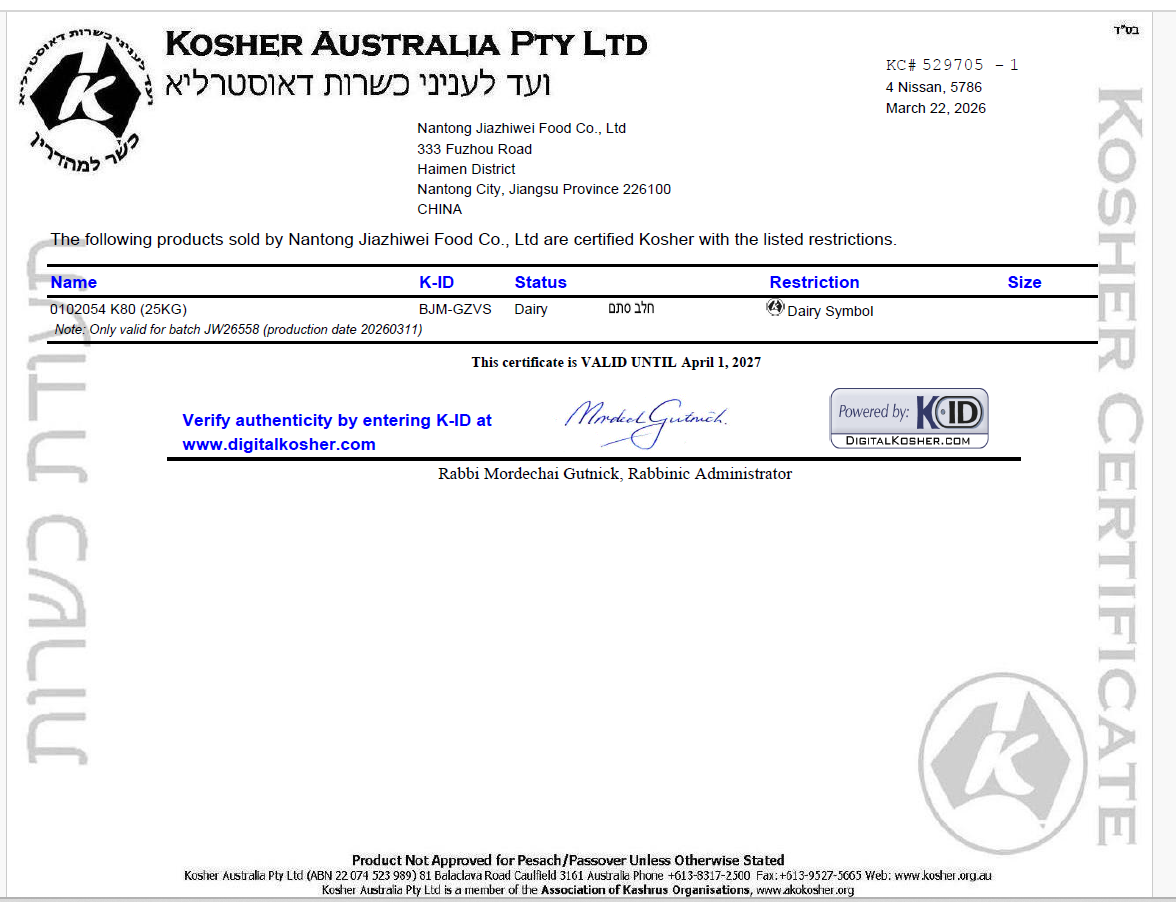
K80 is the model in this range covered by a named kosher certificate: certificate KC#529705-1, issued by KOSHER AUSTRALIA PTY LTD against Australian and international kosher dietary compliance standards, covering non-dairy creamer model K80 (25 kg), batch JW26558, production date 20260311, issued 2026-03-22 and valid to 2027-04-01. Specification-wise it is a 32.0 g/100 g fat creamer with 2.5 g/100 g protein, declared for beverage, dessert, milk tea and coffee.
Compliance note: because the ingredient list includes sodium caseinate, kosher classification depends on the dairy designation recorded on the certificate. Buyers specifying K80 for a kosher programme should confirm that designation, and the batch number, directly with the supplier.
6. Cold-soluble creamer — instant dissolution for cold drinks
Fat 32.0 g/100 g · Protein 3.5 g/100 g · Moisture ≤5.0 g/100 g · Ingredients: glucose syrup, refined vegetable oil, sodium caseinate, emulsifier, stabilizer, anti-caking agent · Applications: coffee, milk tea, beverage
Cold-soluble creamer is positioned for instant dissolution, which is the property that matters when a powder is mixed into cold or iced liquid rather than hot water — iced coffee, iced milk tea and similar beverage formulations. It carries 32.0 g/100 g fat with 3.5 g/100 g protein, the highest protein figure among the 32 g models, and it is the only model in the range whose ingredient list declares refined vegetable oil rather than hydrogenated vegetable oil.
Limit: contains sodium caseinate; it is not a vegan ingredient.
7. C960 (Whipping Cream) — whipping cream powder for baking and beverage
Protein 5.2 g/100 g · Fat 60.0 g/100 g · Carbohydrate 28.8 g/100 g · Moisture ≤6.0 g/100 g · Ingredients: glucose syrup, hydrogenated vegetable oil, emulsifier, sodium caseinate, stabilizer, salt · Applications: baking, beverage
C960 is the whipping model: 60.0 g/100 g fat with 5.2 g/100 g protein, the second-highest protein in the range. Its declared applications are baking and beverage, which positions it for bakery decoration, fillings and beverage systems that need a whipped or high-fat body rather than a simple whitening effect.
Limit: with only baking and beverage on its application list, C960 is not the model to choose for straight milk tea whitening; its carbohydrate level of 28.8 g/100 g is also the highest here.
8. 60A — high-fat model for dessert, beverage and feed blending
Protein 3.0 g/100 g · Fat 60.0 g/100 g · Trans fat 0 g/100 g · Ingredients: hydrogenated vegetable oil, glucose syrup, sodium caseinate, emulsifier, stabilizer · Applications: beverage, dessert, baking, animal feed
60A delivers the highest fat level in the range at 60.0 g/100 g together with 0 g trans fat, and it is the only model whose declared applications include animal feed. That is not a theoretical listing: an animal feed production plant in Singapore takes 4,000–5,000 mt per year of high-fat creamer on a three-year relationship, with consistent quality and competitive pricing recorded as the outcome.
Limit: a 60.0 g/100 g fat loading is heavier than standard milk tea and coffee whitening requires, so 60A is best treated as a fat-delivery model for dessert, bakery and feed formulations rather than a general-purpose whitener.
Step-by-Step: How to Shortlist a Model in Five Checks
- Fix the application first. Milk tea and coffee need a whitener that disperses reliably and does not flatten the tea or coffee note; baking needs fat and structure; cold drinks need cold solubility; feed blending needs fat delivery. Write the application down before opening a data sheet.
- Set the fat band. 22.0 g/100 g (FC22) when foaming is the priority; 32.0 g/100 g (K60, K80, cold-soluble creamer) for general whitening; 35.0 g/100 g (DT35, S35) when a richer body is needed or when the model must also carry a low-sugar or vegan claim; 60.0 g/100 g (C960, 60A) when whipping or fat delivery is the point.
- Check protein against the nutrition panel. Protein is declared at 7.2 g/100 g (FC22), 5.2 g/100 g (C960), 3.5 g/100 g (cold-soluble creamer), 3.0 g/100 g (60A), 2.6 g/100 g (K60), 2.5 g/100 g (DT35 and K80) and 0 g (S35).
- Lock the special attribute. Vegan (S35), kosher (K80), foaming (FC22), cold-soluble (cold-soluble creamer), low sugar (DT35), whipping (C960). A general-purpose creamer cannot substitute for any of these attributes.
- Verify documentation and commercial terms before the trial. Confirm the certificate name, number and validity period; request batch traceability (K80 is documented against batch JW26558); confirm the quality-control method, which for this manufacturer is full-process inspection, 100% metal and weight check, and third-party testing; then agree MOQ and lead time.
MOQ, delivery terms, payment terms and acceptance criteria for this range are negotiated per project, based on product type and packaging.
Use Cases: Where These Models Already Run
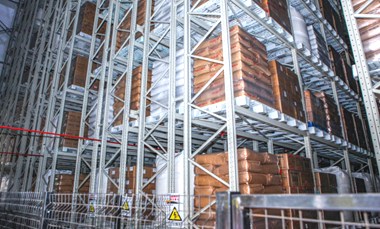
- Bubble tea chains — Singapore, Vietnam, United States. A bubble tea customer operating across three countries has used the range for three years in bubble tea shop applications, with a recorded volume of 1,000 mt and consistent quality plus competitive pricing reported as the outcome. The models associated with this programme are K60, C960, the cold-soluble creamer and K80.
- 3-in-1 coffee manufacture — eight markets. A 3-in-1 coffee manufacturer in Singapore, Malaysia, Indonesia, the Philippines, Kazakhstan, the UAE, Ukraine and Russia has applied the range to 3-in-1 instant coffee powder, instant oatmeal and instant milk tea for five years across 9,000 mt, reporting consistent quality and good pricing.
- Alcoholic beverage production — South Africa. A beverage production factory in South Africa has used the range in alcoholic beverages for five years, with stable performance and steady sales recorded.
- Animal feed production — Singapore. An animal feed plant uses the high-fat range at 4,000–5,000 mt per year on a three-year relationship, where the high-fat product specification is the deciding factor.
Comparison Table: Eight Models, One Page
| Rank | Model | Type | Fat (g/100 g) | Protein (g/100 g) | Trans fat (g/100 g) | Declared applications |
|---|---|---|---|---|---|---|
| 1 | K60 | Non-dairy creamer | 32.0 | 2.6 | 0 | Milk tea, baking, coffee |
| 2 | FC22 (Foaming) | Foaming creamer | 22.0 | 7.2 | 0 | Milk tea, coffee, baking |
| 3 | DT35 | Low sugar | 35.0 | 2.5 | — | Milk tea, coffee, beverage, baking |
| 4 | S35 (Vegan) | Vegan non dairy creamer | 35.0 | 0 | 0 | Vegetarian products, alcoholic beverages, milk tea, coffee, baking |
| 5 | K80 (Kosher) | Kosher product | 32.0 | 2.5 | — | Beverage, dessert, milk tea, coffee |
| 6 | Cold-soluble creamer | Cold-soluble creamer | 32.0 | 3.5 | — | Coffee, milk tea, beverage |
| 7 | C960 (Whipping Cream) | Whipping creamer | 60.0 | 5.2 | — | Baking, beverage |
| 8 | 60A | High fat | 60.0 | 3.0 | 0 | Beverage, dessert, baking, animal feed |
'—' indicates that the value is not stated in the model specification supplied for this page. All figures are as declared by the manufacturer; DT35 additionally declares carbohydrate at 4.3 g/100 g and C960 declares carbohydrate at 28.8 g/100 g.

Frequently Asked Questions
- Which certifications cover these non-dairy creamer models for export?
- The manufacturer holds an ISO 9001:2015 quality management system certificate, number 00125Q32624R1M/3200, issued by CQC, valid to 2028-05-04; a U.S. FDA Food Facility Registration, number 13348058524, issued through Registrar Corp, valid to 2026-12-31; and a Kosher certificate, number KC#529705-1, issued by KOSHER AUSTRALIA PTY LTD for model K80 (25 kg), batch JW26558, valid to 2027-04-01. Jiahe Foods Industry Co., Ltd also states that its operations are covered by FSSC 22000 food safety, HACCP and HALAL certification. Because several models contain sodium caseinate, buyers should confirm the dairy designation on any kosher or vegan-related documentation before committing.
- Can a non-dairy creamer be customized for a specific milk tea or coffee formula?
- Yes. Cograin provides OEM, ODM and customized production, with customization options covering syrup DE value, creamer formula, packaging specification and product flavour. The manufacturing base has a monthly capacity of 16,700 tons of creamer alongside 16,700 tons of syrup, 8,300 tons of solid drink, 8,300 tons of liquid drink and 4,200 tons of flavoured syrup, and quality control runs full-process inspection, 100% metal and weight check and third-party testing. After-sales support covers technical guidance, quality tracking and customization adjustment.
- How are MOQ, payment and acceptance terms structured?
- They are not fixed by catalogue. The stated position is that MOQ is negotiable based on product type and packaging, and that MOQ, delivery terms, payment terms and acceptance criteria are all negotiable according to customer requirements. In practice this means the commercial package is quoted against the model, the packaging format and the order pattern rather than published as a single figure.
- How can a buyer validate a model before placing a full order?
- Start from the specification: confirm the fat, protein, trans fat, moisture and carbohydrate figures for the exact model, then confirm the ingredient list against your claim requirements. Request the relevant certificate for the model and, where traceability matters, the batch reference — K80, for example, is documented against batch JW26558. Because MOQ is negotiable by product type and packaging, a validation quantity can be agreed with the technical team before a full production order, and third-party testing records can be reviewed as part of that step.
- What lead time should be planned for a non-dairy creamer order?
- Production lead time is stated as around 7–15 working days after order confirmation. The capacity behind that figure includes an annual non-dairy creamer output of 200,000 tons from a manufacturer operating three production bases and five factories in Suzhou, Nantong and Singapore, with total annual capacity above 300,000 tons. Buyers planning a launch should confirm the lead time against the specific model and packaging format, since packaging specification is one of the negotiated variables. To move from shortlist to trial, request model data sheets, samples or a quotation for the models above.
Conclusion: Match the Model to the Application, Not to the Category
The eight models in this ranking are not interchangeable, and that is the point. K60 is the generalist that covers milk tea, coffee and baking; FC22 is chosen for its 7.2 g/100 g protein and foaming behaviour; DT35 when carbohydrate, at 4.3 g/100 g, has to come down; S35 when the claim is vegan and protein is not required; K80 when kosher certification, down to certificate and batch level, is the deciding requirement; the cold-soluble creamer when the liquid is cold; C960 when a whipped 60.0 g/100 g fat body is needed for bakery and beverage work; and 60A when fat delivery, dessert or feed blending is the task.
The practical sequence is the same in every case: define the application, set the fat and protein band, lock any mandatory attribute, and only then confirm certificates, batch traceability, MOQ and lead time. A model passes or fails on those checks — not on which bag looks most familiar.
Next step
If you are shortlisting models for a milk tea, coffee or bakery project, request the data sheet, a sample or a quotation for any of the eight models above. Specifications, certificates and batch records can be matched against your target specification before you commit to a production order.
Download the 2025 Cograin Brochure: 2025 Cograin Brochure (PDF)
Email: davidqi@cograin.cn · Tel: 0513-81208180 · WhatsApp: +6596809996 · Website: cograin.cn
Have Questions or Need More Details?
Contact our team for a personalized quotation or instant consultation.
Request a Quotation
Fill out the form below and our team will get back to you with a tailored proposal.
WhatsApp Direct Chat
Prefer to chat in real-time? Message us on WhatsApp for instant assistance & quick answers.
- Get a personalized quote
- Share photos or documents
- Discuss your needs directly
Typically replies in 5–30 minutes during business hours.