
Non-Dairy Creamer Application Guide for Bakery Projects: Choosing Foaming, Whipping, or High-Fat Models
Bakery project managers do not select a non-dairy creamer by brand or by price per kilogram. They select it by function. A foaming model such as FC22 is specified for foam stability; a whipping cream powder such as C960 for aeration and shape retention in toppings and fillings; a high-fat model such as 60A for richness and body in cream layers; and a standard model such as K60 for general baking where a consistent, neutral whitener is sufficient. Plant-based bakery projects add a fifth path: the vegan model S35.
This guide is written for the decision-to-execution stage of a bakery project — after the finished product concept is fixed and before the supply contract is signed. It explains what each creamer family does inside a bakery process, sets out a six-step selection workflow, and provides a decision matrix that maps foam stability, whipping performance and fat level to specific bakery items such as cakes, toppings and fillings.
Model designations in this guide refer to the creamer types used for bakery projects. The declared fat content, moisture and full ingredient list for each model should always be read from the supplier’s specification sheet and the certificate of analysis (COA) for the batch you will actually receive — not from a brochure summary.
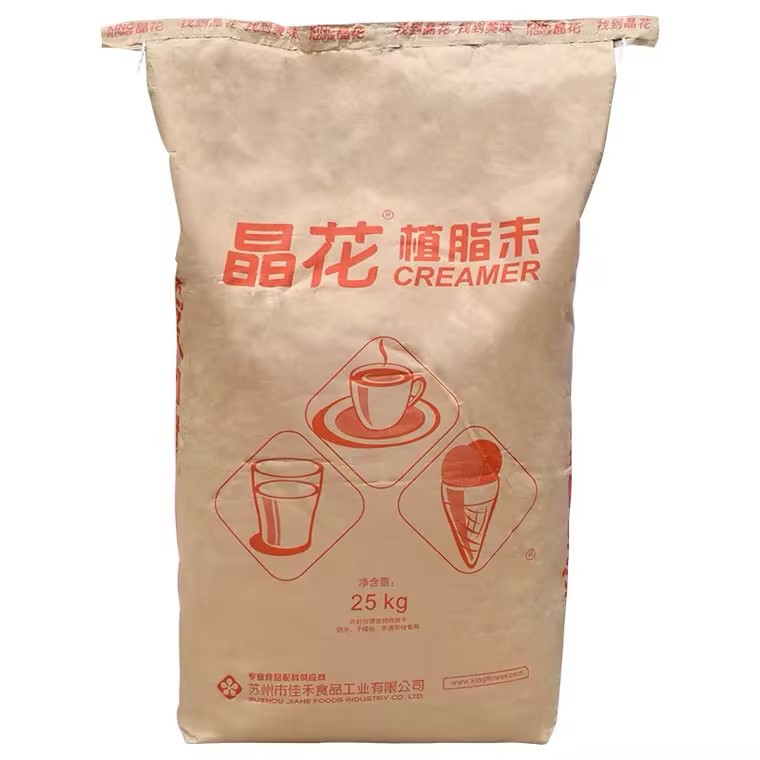
Bulk 25 kg packaging: bakery projects are usually supplied on repeating production schedules, not single orders.
Why Bakery Projects Mis-Select Non-Dairy Creamer
Bakery projects rarely fail because a creamer is technically poor. They fail because the wrong functional family was specified for the application, or because a model was approved on a bench sample that did not survive production scale-up. Five patterns account for most of the damage.
- Beverage-grade creamer used in a filling. A creamer designed to whiten a hot cup does not need to hold structure in a chilled cake filling. When it is substituted because it is cheaper or already in stock, the filling weeps, the topping collapses, or the finished texture is judged as thin.
- Foam performance assumed rather than tested. Foam stability depends on the temperature and sugar level of the finished item and on how long the foam must stand before the product reaches the customer. Foam that holds for two minutes on a bench can fail on a display counter.
- Fat level treated as a marketing number. Fat level drives richness and mouthfeel, but it also changes how a cream behaves in mixing, chilling and freezing. Specifying the highest-fat model by default adds cost without necessarily adding the texture the product needs.
- Compliance verified after formulation. “Non-dairy” is a labelling term, not a guarantee of dairy-free status. That distinction determines whether a bakery SKU can carry a vegan or dairy-free claim in the destination market.
- Supply treated as a one-off purchase. Bakery SKUs run on repeating schedules. If the model is discontinued, reformulated, or the supplier cannot hold the monthly volume, the reformulation cost lands on the bakery — usually during a peak season.
For a bakery project, creamer selection is therefore two decisions, not one. The first is functional: which model matches the finished product. The second is structural: which supplier can hold that model, at that specification, for the commercial life of the product.
Industry Background: What the Non-Dairy Creamer Market Looks Like
Non-dairy creamer is a large, mature ingredient category, and its centre of gravity is still beverages — worth knowing when you are buying for a bakery. Coffee applications alone account for approximately 41% of global non-dairy creamer utilization (Business Research Insights, 2024). Powdered formats dominate at a 68.4% share of the market in 2024, largely because of long shelf life and ease of storage (Future Market Insights). The overall category was valued at USD 2.4 billion in 2024 and is projected to reach USD 4.4 billion by 2034 (Future Market Insights).
Fat level divides the category further. Medium-fat variants in the 21–50% range are the most widely used, holding a 43.6%–46% share based on balanced texture and flavour performance (Future Market Insights / Business Research Insights, 2024). Functional and higher-fat grades sit alongside that mainstream. In the adjacent spray-dried fat powder category, the global MCT powder market was valued at USD 585 million in 2024 and is growing at a CAGR of 5.7% (Intel Market Research) — a signal that fat powders are increasingly formulated for defined functional roles rather than generic whitening.
Global players in the category include Nestlé (Coffee-Mate), Danone (Silk), FrieslandCampina Kievit and Kerry Group (Grand View Research), alongside manufacturers organized around bulk functional creamers for industrial customers. Cograin, the brand behind the models discussed in this guide, is the export-facing identity of Jiahe Foods Industry Co., Ltd. — a food ingredient manufacturer founded in 2001, headquartered in Suzhou, Jiangsu Province, China, and listed on the main board of the Shanghai Stock Exchange since 2021 (stock code 605300). Its creamer range is supported by in-house manufacturing capacity rather than third-party tolling, a structural detail that matters for the continuity decision described later in this guide.
Two regulatory details should be checked at the start of a bakery project. Under FDA rules, a product may be labelled “non-dairy” even when it contains milk derivatives such as sodium caseinate, provided the derivative is declared as “a milk derivative” on the label. For Kosher certification, the same ingredient means a “non-dairy” creamer is classified as Dairy (OU-D), because the derivative is treated as milk under Kosher law (OU Kosher). Both rules affect how a bakery can legally describe the finished product.
Detailed Selection: The Four Functional Families — Plus a Vegan Path
A workable bakery framework splits non-dairy creamer into four functional families and one plant-based option. The families are defined by what the powder does in the finished item, not by where it was first used.
Foaming model FC22 — foam stability above all
FC22 belongs to the foaming family, specified when the creamer has to generate and hold a foam layer. Foam stability is the governing attribute: the model is chosen because the finished item is served or displayed with foam, and because foam collapse within minutes is a visible quality defect rather than a cosmetic detail. In bakery terms this covers foam-topped desserts and finishing steps where a foam head is part of the product specification.
The validation question for a foaming model is always the same: how long must the foam hold at the temperature at which the customer receives the product? That requirement — not the foam volume at the mixing bowl — should drive the trial.
Whipping cream powder C960 — aeration and shape retention
C960 is a whipping cream powder, selected for toppings, cream layers and fillings that are aerated and must then hold their shape. Whipping performance governs whether a cake topping holds volume at chilled display temperature and whether it resists weeping over the product’s shelf life. This is a different requirement from foam retention in a hot liquid, which is why a foaming model and a whipping model are not interchangeable even though both involve air.
Selection is driven by whipping performance combined with the fat level the finished texture requires. The ingredient declaration then determines whether the resulting product can carry the vegan claim the bakery intends to make.
High-fat model 60A — richness and body
A high-fat creamer such as 60A is specified when the finished bakery item depends on a full, creamy mouthfeel: premium cream layers, ganache-style fillings and pastry fillings where creaminess is a selling point rather than a background note.
The trade-off should be stated openly. Higher fat generally means higher ingredient cost and different behaviour in mixing and chilling. High-fat is a deliberate cost decision for a product sold on richness — not a default upgrade for every line.
Standard model K60 — the general-purpose base
K60 represents the standard family: consistent whitening, body and a neutral flavour profile for breads, biscuits, sponge bases and general bakery fillings where no specific foaming or whipping behaviour is required.
Most bakery projects start here and move only when a trial produces a defined failure — foam that collapses, a topping that will not hold volume, or insufficient richness in a filling. Starting from the standard model keeps the specification simple until the finished product proves it needs more.
Vegan model S35 — for plant-based bakery projects
S35 covers bakery formulations that must be built on a vegan platform. The practical constraint is that the creamer is only one input into a claim: if the finished bakery product is marketed as vegan or dairy-free, the creamer’s full ingredient declaration has to be verified against the destination market’s labelling rules, including the FDA position on milk derivatives and the Kosher classification described above. A vegan decision is therefore a label decision as much as a formulation decision.
Read the specification, not the brochure. For every model in this guide, three parameters decide the match: declared fat level, moisture, and the ingredient declaration. Confirm all three on the specification sheet and on the COA for the batch you will receive. The wider functional range also includes cold-soluble, acid-resistant and zero-sugar formulas, which matter when a bakery project involves cold-chain products, acid fillings or reduced-sugar positioning.
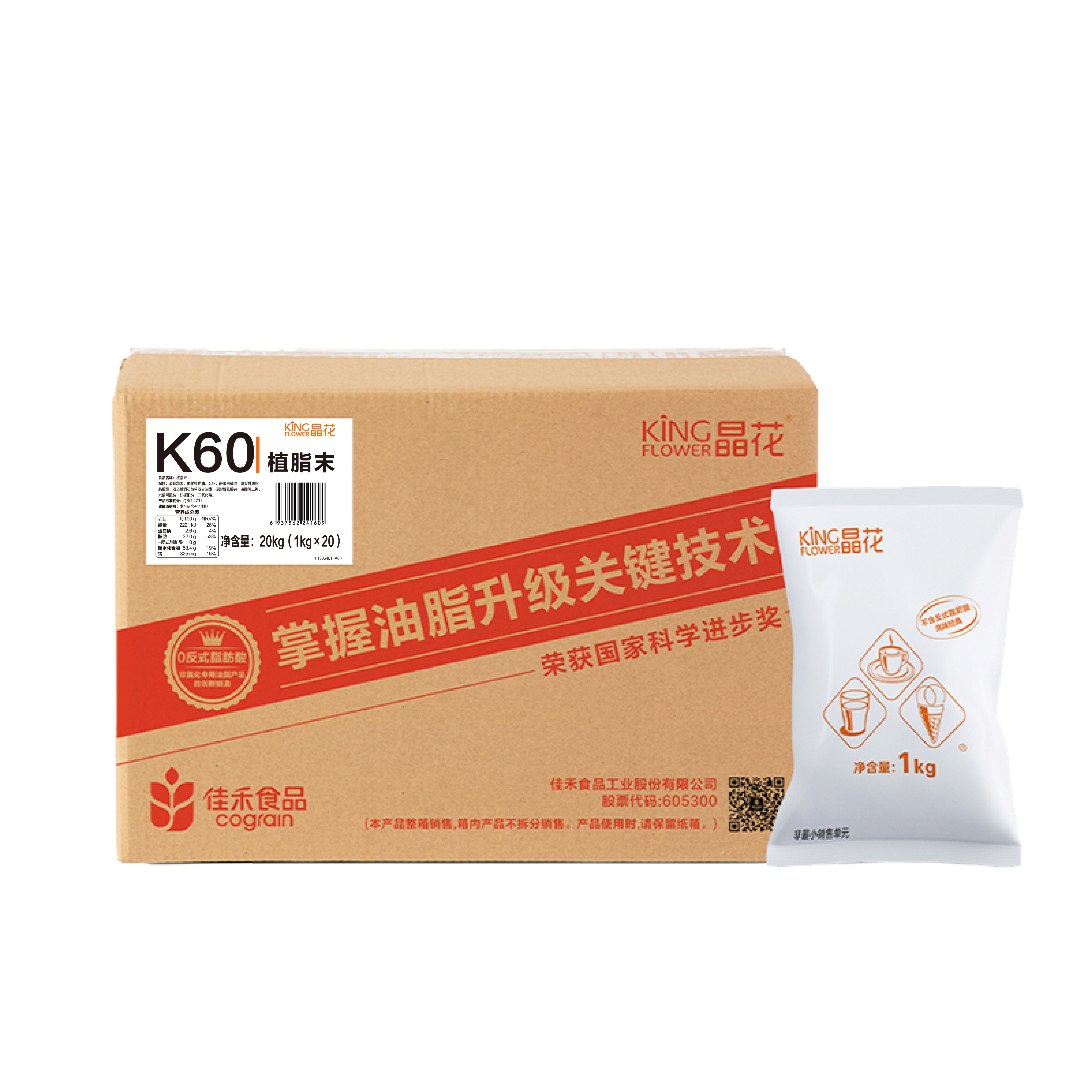
Standard model K60: the general-purpose reference point that most bakery projects start from before moving to a functional grade.
Step-by-Step: Selecting and Locking a Creamer Model
Step 1 — Define the finished product and the process window. Write down how the item is made and stored: baked, chilled, frozen, hot-filled, or assembled at store level. The temperature at the point of use is the single most important input, because foam behaviour and whipping performance both change with temperature.
Step 2 — Convert the process into one primary functional requirement. Most bakery items need one dominant function from the creamer: foam stability, whipping performance, fat richness, or neutrality. Naming one primary function prevents the most common specification error — trying to satisfy every requirement with a single model and ending up with a compromise that performs adequately in none of them.
Step 3 — Screen the models against the decision matrix. Use the table below to reduce the choice to one or two candidates, then confirm the commercial and compliance details before any trial. The matrix is a screening tool, not a substitute for testing in your own recipe.
Step 4 — Verify compliance and labelling for the destination market. Collect both supplier-level system certifications and product-level documents for the specific model. Certifications held by the manufacturer include ISO9001 quality management, FSSC22000 food safety, HACCP, HALAL, ISO14000 environmental management and OHSAS18000 occupational health and safety. If the finished product will claim vegan, dairy-free or Kosher status, verify the ingredient declaration against the applicable rule before the recipe is finalised.
Step 5 — Run a bench trial, then a pilot batch. A bench trial identifies gross failures quickly. A pilot batch reveals behaviour at production scale, where mixing times, hold times and cooling rates differ. Assess the trial against the finished-product requirement defined in Step 1, not against the previous supplier’s sample alone. Ask for the COA and confirm that quality control covers full-process inspection, 100% metal and weight checks and third-party testing.
Step 6 — Lock the commercial and continuity terms. Confirm four terms in writing: MOQ, delivery terms, acceptance criteria and payment terms, all of which are negotiable based on the project’s requirements. Then verify capacity and lead time against your production calendar. For non-dairy creamer, monthly capacity runs at 16,700 tons, and typical production lead time is around 7–15 working days after order confirmation.

Plant-based and functional food production: vegan bakery projects depend on a factory base, not only on a formulation sheet.
Use Cases: Which Model Fits Which Bakery Application
Industrial bakery fillings and cream layers. Where richness is the product promise — layered cakes, premium rolls, filled pastries — the high-fat model 60A is the natural first candidate, with fat level and cost impact confirmed on the specification sheet.
Bakery chain topping stations. Where cream is whipped on site or in a central kitchen and must hold shape through display, a whipping cream powder such as C960 addresses aeration and shape retention directly.
Café-bakery hybrid menus. Where one outlet finishes both baked items and foam-topped desserts, a foaming model such as FC22 allows a single functional creamer to cover the foam-finishing step without compromising the baked range.
Vegan and plant-based bakery lines. S35 supports formulations built around a vegan claim, with the full label verified against destination-market rules before launch.
General bread, biscuit and sponge production. A standard model such as K60 delivers consistent whitening and neutral flavour where no foaming or whipping function is required, and keeps the specification simple.
Cold-chain and frozen bakery products. Where the finished item is frozen or cold-distributed, a cold-soluble formula should be added to the screening criteria in Step 3, because solubility behaviour at low temperature affects how the creamer disperses on the production line.
Comparison Table: Bakery Creamer Decision Matrix
| Model | Functional family | Primary bakery application | Primary selection driver | Confirm before trial |
|---|---|---|---|---|
| FC22 | Foaming | Foam-topped desserts and finishing steps | Foam stability at the temperature the customer receives the product | Required foam hold time in your process |
| C960 | Whipping cream powder | Cake toppings, cream fillings, pastry cream layers | Whipping performance and shape retention during display | Declared fat level and ingredient declaration |
| 60A | High-fat | Premium cream layers, rich and ganache-style fillings | Fat level and the mouthfeel the product is sold on | Fat level, cost impact and moisture on the spec sheet |
| K60 | Standard | Breads, biscuits, sponge bases, general fillings | Consistent whitening and neutral flavour | Spec match against your current reference |
| S35 | Vegan | Plant-based bakery SKUs and vegan-labelled lines | Ingredient declaration and compliance with the vegan claim | Destination-market labelling rules |
This matrix compares functional families; it is not a ranking of quality. Each family is the correct choice for a different finished product, and no single model is appropriate for all bakery applications.
Frequently Asked Questions
What certifications and labelling should a bakery project verify before ordering non-dairy creamer?
Verify two layers. At supplier level, confirm the quality and food safety systems behind the product: the certifications held by the manufacturer include ISO9001 quality management, FSSC22000 food safety, HACCP, HALAL, ISO14000 environmental management and OHSAS18000 occupational health and safety. Product-level certificates for the specific creamer model should also be requested. At label level, remember that FDA rules allow a product to be labelled “non-dairy” even when it contains milk derivatives such as sodium caseinate, provided the derivative is declared as “a milk derivative”. For Kosher purposes, a “non-dairy” creamer containing sodium caseinate is classified as Dairy (OU-D). Bakery products marketed as vegan or dairy-free therefore require the ingredient declaration to be checked, not just the creamer name.
Can non-dairy creamer be customised for a specific bakery formulation?
Yes. The manufacturer provides OEM, ODM and customized production services, and the customization options include creamer formula, packaging specification and product flavour. Functional formulas in the range also include cold-soluble, acid-resistant and zero-sugar variants, which can be relevant when a bakery project involves cold-chain products, acid fillings or reduced-sugar positioning. Customisation should be scoped with a specification sheet agreed before sampling, so that trial results are judged against a fixed target rather than a moving one.
What drives the cost of non-dairy creamer in a bakery project?
Cost is driven by the functional family, the fat level, the packaging format, the certification requirements of the destination market, and the order volume. Instead of requesting a single price per ton, ask for a costed option set — two or three models, each priced with its packaging and delivery terms — so the trade-off between performance and cost is visible. Commercial terms are flexible: MOQ, delivery terms, acceptance criteria and payment terms are negotiable based on the project’s requirements. On long-run economics, bulk supply from a manufacturer with in-house capacity is positioned at competitive bulk pricing with consistent quality, at 10–20% lower long-term cost compared with premium import brands, without compromising safety standards.
How should a bakery validate a creamer model before committing to production?
Use three stages. First, a bench trial using the actual bakery recipe, evaluated against the finished-product requirement rather than against a competitor’s sample alone. Second, a pilot batch at production scale, because aeration, mixing and hold times change the result. Third, verification against the certificate of analysis for the production batch, supported by a quality programme that includes full-process inspection, 100% metal and weight checks and third-party testing. Samples can be requested directly; ask for the model, the packaging format and the specification sheet together, so the trial is documented against fixed parameters.
What lead time and supply continuity can a bakery project expect?
Typical production lead time is around 7–15 working days after order confirmation. Capacity behind it is substantial: non-dairy creamer capacity runs at 16,700 tons per month, and the manufacturer operates three production bases and five factories in Suzhou, Nantong and Singapore, with annual production capacity of more than 300,000 tons across its product lines. Cograin exports about 50% of its output, with Southeast Asia as a main market, and has been listed on the main board of the Shanghai Stock Exchange since 2021 (stock code 605300). For a bakery project, the practical next step is to send the finished-product requirement — item type, process, serving temperature and target vegan or dairy status — and request a model recommendation, a sample and a quotation covering packaging, delivery and payment terms.
Conclusion
Bakery creamer selection comes down to matching function to finished product, then securing that function for the life of the product. Foaming FC22 covers foam stability; whipping C960 covers aeration and shape retention; high-fat 60A covers richness; standard K60 covers general baking; and S35 covers plant-based lines. Screen the candidates against the decision matrix, verify compliance and labelling for the destination market, trial the model in your own recipe at bench and pilot scale, and only then negotiate MOQ, delivery, acceptance criteria and payment terms.
The continuity half of the decision is easier to secure when the supplier manufactures what it sells: 16,700 tons of monthly creamer capacity, three production bases and five factories across Suzhou, Nantong and Singapore, more than 300,000 tons of annual capacity across product lines, and a group listed on the Shanghai Stock Exchange main board since 2021. For a bakery project, that combination is what keeps a specification stable from the first trial batch to the fifth repeat order.
Next Step: Match a Model to Your Bakery Line
Send the finished-product requirement — item type, process (baked, chilled, frozen or assembled), serving temperature and target vegan or dairy status — and Cograin will recommend the most suitable model from the FC22, C960, 60A, K60 and S35 range, together with a sample, a specification sheet and a quotation covering packaging, delivery and payment terms.
Website: www.cograin.cn · Email: davidqi@cograin.cn · WhatsApp: +6596809996 · Brochure: 2025 Cograin Brochure (PDF)
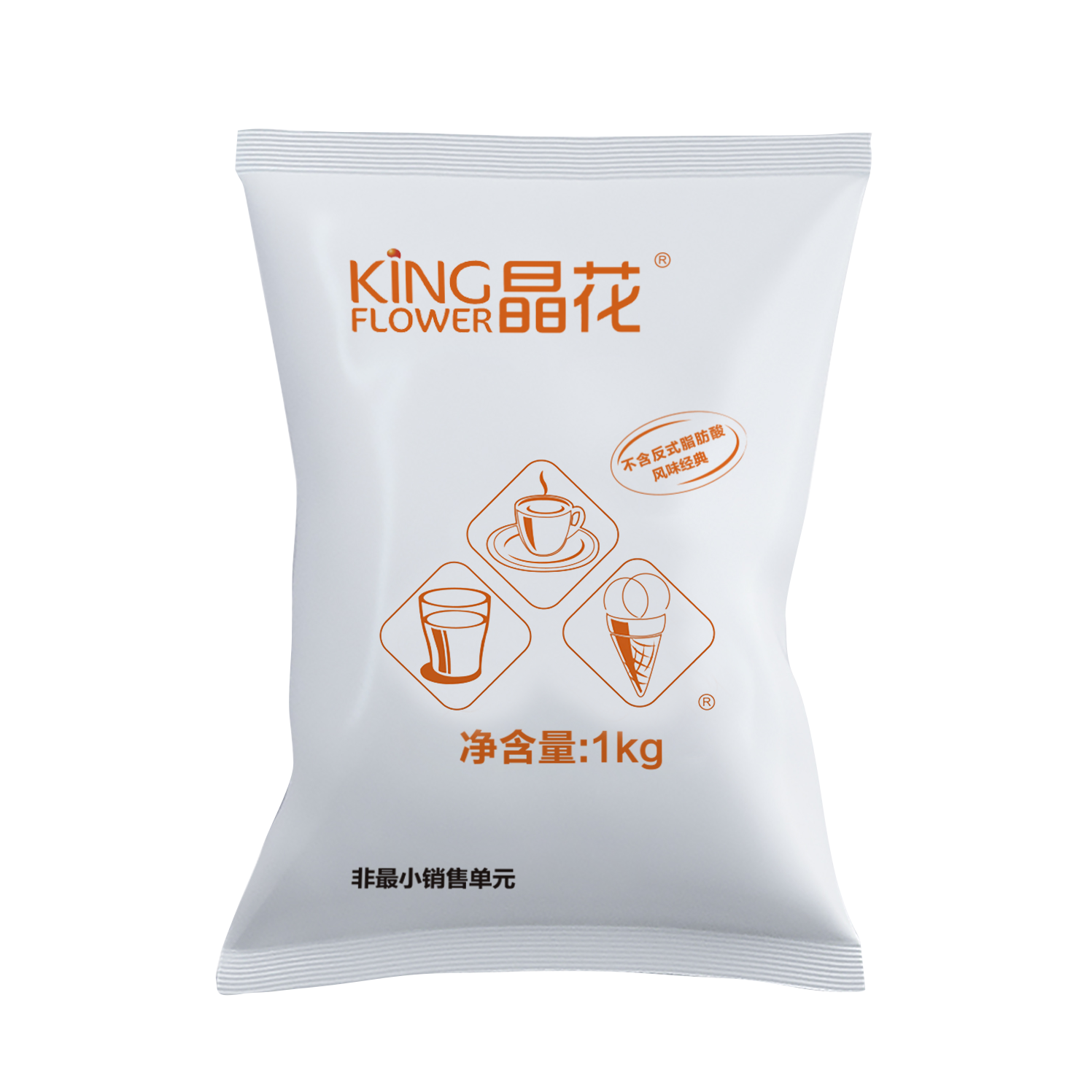
Request the model, the packaging format and the specification sheet together so the trial is documented against fixed parameters.
Have Questions or Need More Details?
Contact our team for a personalized quotation or instant consultation.
Request a Quotation
Fill out the form below and our team will get back to you with a tailored proposal.
WhatsApp Direct Chat
Prefer to chat in real-time? Message us on WhatsApp for instant assistance & quick answers.
- Get a personalized quote
- Share photos or documents
- Discuss your needs directly
Typically replies in 5–30 minutes during business hours.