
Non-Dairy Creamer Specs: Fat, Protein and Moisture Explained
Non-Dairy Creamer Specs: Fat, Protein and Moisture Explained
A parameter-first selection framework for beverage, baking and animal feed applications, built on the published specifications of eight Cograin non-dairy creamer grades.
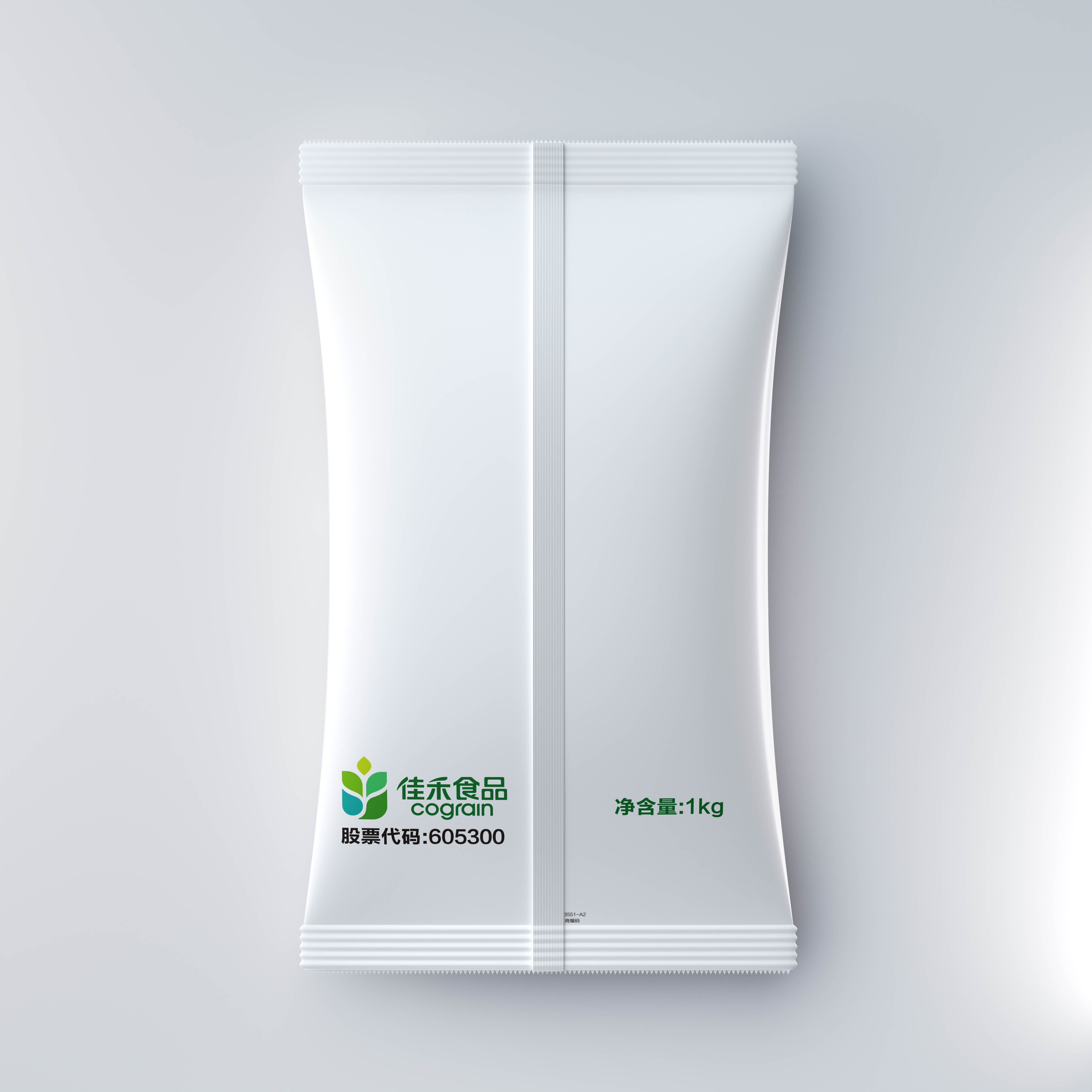
Cograin non-dairy creamer 1 kg pack, back view — the panel buyers read before confirming a grade.
The three numbers that decide whether a non-dairy creamer performs in your process are fat, protein and moisture. On Cograin parameter sheets those figures separate grades that share the same product name: K60 publishes 32.0 g fat and 2.6 g protein per 100 g; DT35 publishes 35.0 g fat with a low 4.3 g carbohydrate figure; FC22 combines the lowest fat value in the range (22.0 g) with the highest protein (7.2 g); and S35 is the vegan grade at 35.0 g fat and 0 g protein. Reading those numbers against your end use is faster and cheaper than discovering the mismatch during a production trial.
Cograin is the non-dairy creamer brand of Jiahe Foods Industry Co., Ltd., a food ingredient manufacturer founded in 2001 and headquartered in Suzhou, Jiangsu Province, listed on the main board of the Shanghai Stock Exchange in 2021 under stock code 605300. The company runs three production bases and five factories in Suzhou, Nantong and Singapore, with annual capacity that includes 200,000 tons of non-dairy creamer. The wider product range covers non-dairy creamer, starch syrup, cane syrup, flavored syrup, powdered fat products and liquid line products.
This guide is written for buyers and product developers at the research and evaluation stage. It is a technical cheat sheet rather than a brochure: fat, protein, moisture and carbohydrate values for eight grades, what each value changes in baking, beverage and animal feed applications, the labelling constraints that sit on top of the numbers, and the commercial checks — MOQ, lead time, sampling and certificate verification — that turn a parameter match into repeatable supply.
Why a creamer that passes the price check can still fail a production trial
Non-dairy creamer is a product family, not a specification. Within the family, texture, whitening power, foam behaviour, storage stability and label claims are each set by different numbers, and a grade that reads correctly to procurement can still be wrong for the line. Third-party market research from Future Market Insights places medium-fat variants (21–50%) at 43.6%–46% of the global category, and Business Research Insights reports that coffee applications account for approximately 41% of non-dairy creamer utilization. In practice most projects are decided inside a narrow fat band, and the numbers that separate one grade from another are the secondary ones.
Four failure patterns account for most mismatches:
- Buying by the name non-dairy creamer alone, so a 32.0 g whitening grade is compared against a 22.0 g foaming grade as if the two were interchangeable.
- Treating protein as a rounding error, when it ranges from 0 g (S35) to 7.2 g (FC22) in this data set and governs foam and, in baking, structure and browning.
- Ignoring the moisture ceiling — ≤5.0 g versus ≤6.0 g in the published grades — which is the parameter most often behind caking, poor flow and shelf-life complaints in humid markets.
- Ordering against the label name instead of the formula. Sodium caseinate and milk powder appear in several material lists, which changes how the product must be declared in the USA and how it is classified for Kosher certification.
A related trap is assuming the lowest fat figure is automatically the light choice. In the published Cograin range the lowest fat value belongs to FC22, a foaming creamer at 22.0 g fat and 7.2 g protein, while the vegan grade S35 sits at 35.0 g fat with 0 g protein. Fat level and functional role are separate axes, and a buyer who conflates them will shortlist the wrong grade for a foam-led or vegan-led brief.
Industry background: how the category is structured
The global non-dairy creamer market was valued at USD 2.4 billion in 2024 and is projected to reach USD 4.4 billion by 2034, according to Future Market Insights, with powdered formats holding a 68.4% share in 2024 because of shelf life and storage simplicity. Fat content is itself a segmentation axis: medium-fat grades in the 21–50% band hold a 43.6%–46% share of the category, which is precisely where Cograin's 32.0 g and 35.0 g grades sit, while 60.0 g grades such as 60A and C960 serve whipping, high-fat baking and feed briefs.
Adjacent categories are moving in the same direction. Intel Market Research values the global MCT powder market at USD 585 million in 2024 with a 5.7% CAGR, which reflects the wider search for alternative fat systems. Market sizing should always be read with its scope in mind: Grand View Research measures a broader coffee creamer market at USD 4.95 billion for 2024, so two apparently conflicting reports may simply be using two definitions.
The competitive field is well populated. Grand View Research lists Nestlé (Coffee-Mate), Danone (Silk), FrieslandCampina Kievit and Kerry Group among the leading players in the category. For a buyer, the practical implication is not a brand ranking but specification depth: in a crowded shelf, the parameters on the sheet — not the category name — are what make one grade fit a project.
The four parameters, and what each one changes
Fat: the whitening, body and structure dial
Published fat content across the eight grades runs from 22.0 g/100 g (FC22) to 60.0 g/100 g (60A and C960). Between those two ends sit the whitening grades: K60, kosher k80 and the cold-soluble grade at 32.0 g, and DT35 and S35 at 35.0 g. Fat is the variable that most directly changes opacity and mouthfeel in a beverage, and it changes structure in baking, where a 60.0 g whipping grade such as C960 is doing a different job from a 32.0 g whitening grade. The selection rule is to fix the fat band from the required whitening strength and body first, then confirm the process form — foaming, whipping, cold-soluble or standard — rather than choosing a form and hoping the fat matches.
Protein: the foam, structure and labelling dial
Published protein values span 0 g/100 g (S35 vegan) to 7.2 g/100 g (FC22 foaming). The standard grades sit between: 2.5 g (DT35, kosher k80), 2.6 g (K60), 3.0 g (60A), 3.5 g (cold-soluble) and 5.2 g (C960 whipping). Protein enters these formulas through the dairy-derived part of the material list — sodium caseinate and milk powder are named for K60 and 60A, and milk powder is named for FC22 — while the S35 vegan grade lists emulsifier, oxidized hydroxypropyl starch and anti-caking agent without a caseinate or milk powder input, which is consistent with its 0 g protein figure. Two consequences follow. Foam-led briefs gravitate to the higher-protein end, and baking briefs value the browning and structure that milk-derived protein contributes alongside fat. The second consequence is regulatory rather than sensory: protein from a milk derivative is a labelling fact, not a marketing choice.
Moisture: the storage, flow and caking dial
Four grades publish a moisture ceiling: K60 and the cold-soluble grade at ≤5.0 g/100 g, and FC22 and C960 at ≤6.0 g/100 g. Moisture is invisible in the finished drink, but it decides how a 25 kg bag behaves after opening, how freely powder flows into a mixer, and how stable a grade remains through months of storage — the profile that matters most in humid export markets. Where the published parameter set for a grade does not include a moisture figure (kosher k80, 60A, DT35 and S35 in the data used here), the correct action is to request the value in the written specification confirmation rather than assume it.
Carbohydrate and cold solubility: the claim and process dials
Only two grades publish a carbohydrate figure: DT35 at 4.3 g/100 g and C960 at 28.8 g/100 g. Because spray-dried creamers are built on a glucose syrup carrier, the carbohydrate number is effectively the carrier-and-sugar dial. DT35's 4.3 g against 35.0 g fat is what makes it the low-sugar grade in the range, while C960's 28.8 g reflects a whipping and baking role where bulk solids carry the whip.
Cold solubility, by contrast, is a process attribute rather than a headline number. The cold-soluble grade publishes 32.0 g fat, 3.5 g protein and ≤5.0 g moisture, and is listed for coffee, milk tea and beverage use. Buyers running cold-fill or instant blends should validate dispersion at the actual liquid temperature and agitation of their line during sampling, because fat and protein figures alone do not express how quickly a powder dissolves. Trans fat is also published at 0 g/100 g for K60, FC22, S35 and 60A, which matters where a buyer's own market or label requires a trans-fat declaration.
Step-by-step: selecting a grade from the parameter sheet
- Write the end-use brief in process terms. Define the application, the liquid temperature, the agitation available and the finished-product claim (vegan, low sugar, trans-fat free, foam or whip) before opening any grade list.
- Set the fat band and the process form together. Use the medium-fat band as the mainstream reference for whitening and body, and reserve 60.0 g grades for whipping, high-fat baking or feed briefs.
- Set a protein floor or ceiling. A vegan or purely whitening brief points to the 0 g protein end; a foam-led cappuccino or milk-tea brief points to the 7.2 g protein foaming grade.
- Confirm the moisture ceiling. Compare the ≤5.0 g and ≤6.0 g options against your storage and humidity conditions, and request the missing value where a grade does not publish one.
- Check the carbohydrate figure if a sugar claim applies. A 4.3 g carbohydrate grade supports a low-sugar position that a 28.8 g grade does not.
- Map the compliance stack. Match the grade to its certification coverage (ISO 9001:2015, FSSC 22000, Kosher, U.S. FDA food facility registration) and check the label-wording rules that apply to milk derivatives.
- Lock the commercial terms. MOQ is negotiable and depends on product type and packaging; lead time is around 7–15 working days after order confirmation; OEM/ODM customization covers creamer formula, product flavor and packaging specification. Quality control runs full-process inspection with 100% metal and weight check plus third-party testing, monthly creamer capacity is 16,700 tons, and after-sales support includes technical guidance and customization adjustment.
Use cases: matching parameters to applications
The same eight grades appear in very different projects once the parameter logic is applied.
Coffee, milk tea and cold beverages
K60 (32.0 g fat, 2.6 g protein, moisture ≤5.0 g) and the cold-soluble grade (32.0 g fat, 3.5 g protein, moisture ≤5.0 g) both list coffee and milk tea; DT35 adds a 4.3 g carbohydrate low-sugar option; FC22 introduces 7.2 g protein for cappuccino-style foam. A bubble tea chain supplied across Singapore, Vietnam and the United States took 1,000 mt over three years for shop use, with consistent quality and pricing recorded as the outcome — the practical test of whether a parameter match holds at scale.
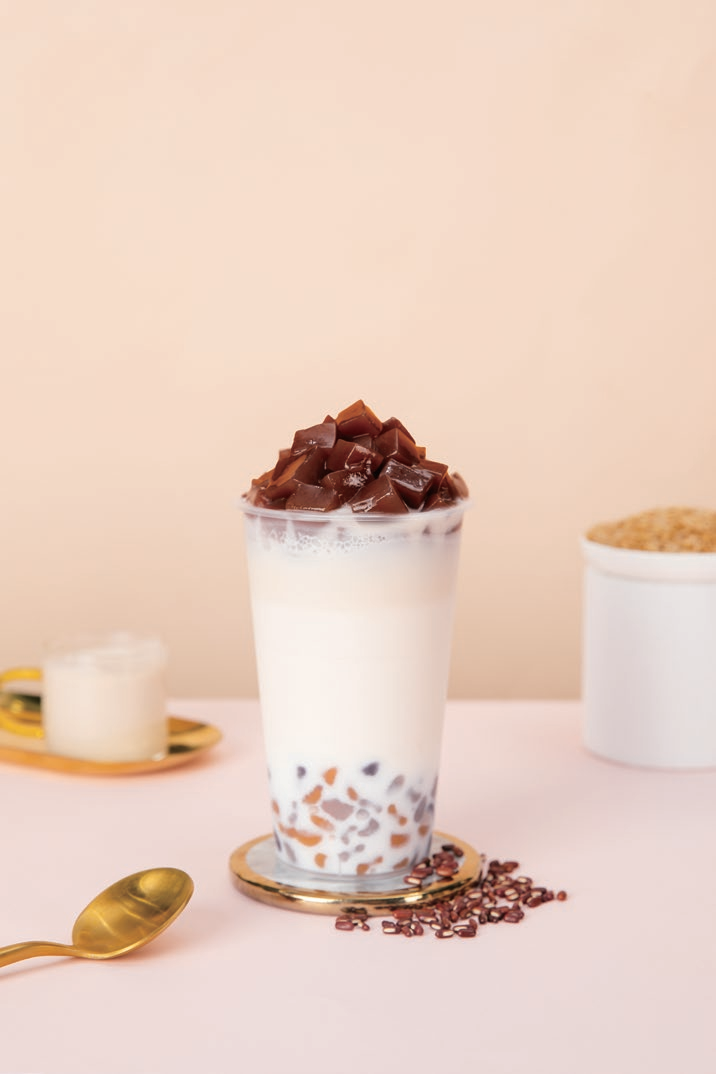
Milk tea application: 32.0–35.0 g fat grades carry whitening and body in tea and coffee systems.
Instant blends, 3-in-1 products and milk powder formats
A 3-in-1 coffee manufacturer operating across Singapore, Malaysia, Indonesia, the Philippines, Kazakhstan, the UAE, Ukraine and Russia has taken 9,000 mt over five years, applying the creamer in 3-in-1 instant coffee powder, instant oatmeal and instant milk tea products. In these formats cold dispersion and whitening consistency matter more than foam, which is why the standard and cold-soluble grades carry the volume and a foaming grade is added only where an instant cappuccino needs head.
Baking and whipping
Baking briefs split between whitening and structure. K60 (32.0 g fat) is listed for baking as a general whitening and body grade, while C960 whipping cream powder publishes 60.0 g fat, 5.2 g protein, 28.8 g carbohydrate and ≤6.0 g moisture and is built for whipping and baking structure. 60A, at 60.0 g fat, 3.0 g protein and 0 g trans fat, covers richer dessert and bakery systems.
Vegan products and alcoholic beverages
S35 (Vegan) publishes 35.0 g fat, 0 g protein and 0 g trans fat, and is listed for vegetarian products, alcoholic beverages, milk tea, coffee and baking. A beverage factory in South Africa has used the range in alcoholic beverages for five years at approximately 1,000 mt, with stable performance recorded as the outcome — a case in which both the absence of dairy-derived protein and the 35.0 g fat body matter to the formulation.
Animal feed
The high-fat 60A grade (60.0 g fat, 3.0 g protein, 0 g trans fat) is listed for animal feed alongside beverage, dessert and baking use. An animal feed production plant in Singapore has taken 4,000–5,000 mt per year for three years, recording consistent quality and favourable pricing, with the high-fat product as the highlighted selection — a brief where energy density, not whitening, drives the choice.
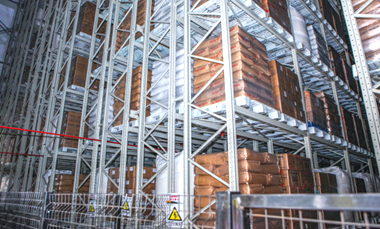
Finished non-dairy creamer stock held for export programmes across beverage, baking and feed specifications.
Comparison table: eight Cograin grades side by side
| Model | Type | Fat (g/100 g) | Protein (g/100 g) | Moisture (g/100 g) | Carbohydrate (g/100 g) | Trans fat (g/100 g) | Applications listed |
|---|---|---|---|---|---|---|---|
| K60 | Standard creamer | 32.0 | 2.6 | ≤5.0 | Not published | 0 | Milk tea, baking, coffee |
| kosher k80 | Kosher grade | 32.0 | 2.5 | Not published | Not published | Not published | Beverage, dessert, milk tea, coffee |
| Cold-soluble creamer | Cold-soluble | 32.0 | 3.5 | ≤5.0 | Not published | Not published | Coffee, milk tea, beverage |
| DT35 | Low sugar | 35.0 | 2.5 | Not published | 4.3 | Not published | Milk tea, coffee, beverage, baking |
| S35 (Vegan) | Vegan non-dairy creamer | 35.0 | 0 | Not published | Not published | 0 | Vegetarian products, alcoholic beverages, milk tea, coffee, baking |
| FC22 (Foaming) | Foaming creamer | 22.0 | 7.2 | ≤6.0 | Not published | 0 | Milk tea, coffee, baking |
| 60A | High fat | 60.0 | 3.0 | Not published | Not published | 0 | Beverage, dessert, baking, animal feed |
| C960 (whipping cream) | Whipping creamer | 60.0 | 5.2 | ≤6.0 | 28.8 | Not published | Baking, beverage |
All figures are per 100 g as published by Cograin. Not published means the value is not part of the parameter set used in this article; buyers should request it in the written specification confirmation.
Read horizontally, the table shows why two grades with the same fat number are not substitutes. Three grades sit at 32.0 g fat but differ in protein (2.5 g, 2.6 g and 3.5 g) and in whether moisture is published. Two grades sit at 35.0 g fat but split on protein (0 g versus 2.5 g) and carbohydrate (not published versus 4.3 g). Two grades sit at 60.0 g fat but differ in protein (3.0 g versus 5.2 g), moisture and carbohydrate. The fat number narrows the shortlist; the remaining columns decide it.
Compliance checks that sit on top of the numbers
Parameter fit is necessary but not sufficient. The label and certification layer decides whether a grade that performs in a trial can be sold in the destination market.
- FDA labelling. FDA rules allow the term non-dairy for products containing milk derivatives such as sodium caseinate, provided the derivative is listed as a milk derivative on the label (source: U.S. Food and Drug Administration). A creamer with 2.5–3.5 g protein from sodium caseinate can therefore keep the non-dairy wording in the USA, but the derivative declaration is required.
- Kosher classification. For Kosher certification, a non-dairy creamer containing sodium caseinate is considered Dairy (OU-D), because the derivative is halachically milk (source: OU Kosher Certification). Buyers sourcing for a Kosher programme should plan for a dairy-classified product unless the formula is caseinate-free, as the 0 g protein S35 vegan grade is.
- Company-level systems. The quality and food safety framework behind the range includes ISO 9001 quality management, FSSC 22000 food safety, HACCP, HALAL, ISO 14000 environmental management and OHSAS 18000 occupational health and safety systems.
| Certification | Standard | Issuing body | Certificate number | Scope and notes |
|---|---|---|---|---|
| ISO 9001:2015 | GB/T 19001-2016 / ISO 9001:2015 | CQC | 00125Q32624R1M/3200 (also cited as CN00125Q32624R1M/3200) | Quality management system of Nantong Jiazhiwei Food Co., Ltd.; global; covers models K60, K80, S35 and 60A; expiry recorded as 2028-05-04 |
| FSSC 22000 | FSSC22000 V6, ISO 22000:2018, ISO/TS22002-1:2009 | Intertek Certification Limited | 162006008 | Food safety management system; global; applies to the non-dairy creamer range |
| Kosher | Australian & international kosher dietary compliance standards | KOSHER AUSTRALIA PTY LTD | KC#529705-1 | Model K80, 25 kg, batch JW26558; issued 2026-03-22; expiry recorded as 2027-04-01; global |
| U.S. FDA Food Facility Registration | Federal Food, Drug, and Cosmetic Act, as amended by the Bioterrorism Act of 2002 and the FDA Food Safety Modernization Act | Registrar Corp | 13348058524 | Model K80; USA market; expiry recorded as 2026-12-31 |
Verification habit: request the current certificate copy at quotation stage and check the validity dates on it, since certificates in this family are re-issued on fixed cycles.

U.S. FDA Food Facility Registration for model K80, issued by Registrar Corp under number 13348058524.
FAQ
Does a non-dairy creamer that contains sodium caseinate still meet non-dairy labelling requirements?
In the United States, FDA rules permit the term non-dairy for products containing milk derivatives such as sodium caseinate, provided the derivative is listed as a milk derivative on the label. The Kosher position differs: a non-dairy creamer containing sodium caseinate is classified Dairy (OU-D), because the derivative is halachically milk. Cograin grades such as K60, 60A, DT35, kosher k80 and the cold-soluble creamer publish 2.5–3.5 g protein per 100 g from dairy-derived inputs, so the derivative declaration applies. S35 publishes 0 g protein with no caseinate or milk powder in its material list, which makes it the grade to shortlist when a vegan or fully plant-based claim has to hold at label level.
Can the fat, protein or flavour profile be customized?
Cograin operates OEM/ODM and customized production, with customization covering creamer formula, product flavor, syrup DE value and packaging specification. The R&D team is made up of 22 engineers, and monthly creamer capacity is 16,700 tons inside an annual capacity that includes 200,000 tons of non-dairy creamer. Quality control uses full-process inspection, 100% metal and weight check and third-party testing, while after-sales support covers technical guidance, quality tracking and customization adjustment.
Is there a published price list by fat level?
No price list is published for these grades. MOQ is negotiable and depends on product type and packaging, and pricing is quoted against a confirmed specification. That is why the parameter sheet should be settled first: fixing fat, protein, moisture, packaging format and certification scope before requesting a quote means the commercial answer reflects a grade that can actually run on the line.
How should a grade be validated before a full order?
Validate against the parameters, not the category name. Request the specification and a sample, then test the behaviour the brief depends on: cold dispersion for instant blends, foam height and stability for FC22, whip for C960, and whiteness and mouthfeel for the 32.0 g and 35.0 g grades. Third-party testing and full-process inspection support that validation, and technical guidance is available if the trial indicates a formula adjustment.
What lead time and capacity should a buyer plan for?
Lead time is around 7–15 working days after order confirmation. Monthly capacity covers 16,700 tons of creamer, 16,700 tons of syrup, 8,300 tons of solid drink, 8,300 tons of liquid drink and 4,200 tons of flavored syrup. Buyers can request the current parameter sheet, certificate copies and a sample through the Cograin inquiry channel to open the specification confirmation.
Conclusion
Fat sets whitening, body and structure; protein sets foam, baking structure and the labelling position; moisture sets storage, flow and caking; carbohydrate sets the sugar claim. Read together across the eight grades, those four numbers turn a crowded category into a shortlist: 22.0 g fat with 7.2 g protein for foam, 32.0 g for mainstream whitening in coffee and milk tea, 35.0 g with 4.3 g carbohydrate for a low-sugar brief, 35.0 g with 0 g protein for vegan and alcoholic-beverage work, and 60.0 g for whipping, richer baking and animal feed.
The compliance layer belongs to the same decision. ISO 9001:2015, FSSC 22000, Kosher and U.S. FDA food facility registration coverage, together with correct milk-derivative declaration practice, determine whether a grade that performs in the lab can be sold in the destination market.
Next step: send your application brief — fat band, protein target, moisture ceiling, packaging format and destination market — and request the current parameter sheet, certificate copies and a sample.
Cograin, the non-dairy creamer brand of Jiahe Foods Industry Co., Ltd. (www.cograin.cn), manufactures to beverage, baking and feed specifications with OEM/ODM customization, a lead time of around 7–15 working days after order confirmation and support from 22 R&D engineers. Email davidqi@cograin.cn or reach us on WhatsApp at +6596809996.
Download the 2025 Cograin Brochure for the full product and certification overview.
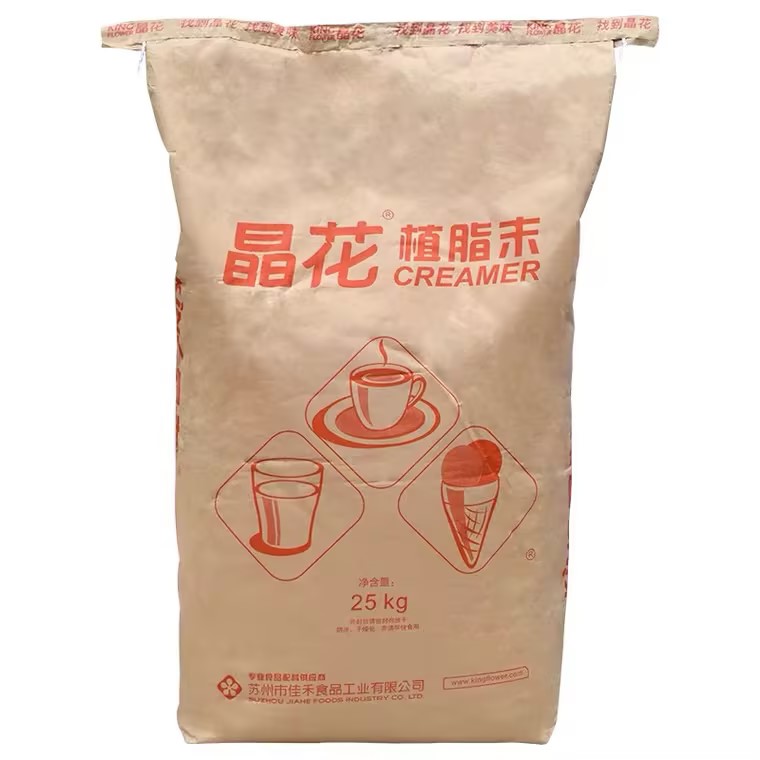
25 kg export format — request the specification, certificate copies and a sample for the grade you shortlist.
Have Questions or Need More Details?
Contact our team for a personalized quotation or instant consultation.
Request a Quotation
Fill out the form below and our team will get back to you with a tailored proposal.
WhatsApp Direct Chat
Prefer to chat in real-time? Message us on WhatsApp for instant assistance & quick answers.
- Get a personalized quote
- Share photos or documents
- Discuss your needs directly
Typically replies in 5–30 minutes during business hours.