
Building a Non-Dairy Creamer Compliance File: K80, S35, 60A
A non-dairy creamer compliance file is the set of documents that lets a buyer, importer or auditor confirm three things about one model: what the powder is made of, what each certificate actually covers, and what the purchase order will accept or reject. Within the Cograin range, three models carry most of that work — the kosher K80, the vegan S35 and the high-fat 60A. They are not three grades of the same product. Each answers a different constraint, and each needs a different document set.
Scope, not volume, is where these files fail. A certificate that names a model, a 25 kg packaging format and a single production batch is strong evidence for that batch and weak evidence for anything else. The practical task is to build the file from model-level facts and to leave a visible gap wherever a document has to be requested rather than assumed.
The sequence below follows the way a researcher or evaluator actually works: what belongs in the file, how the category is regulated and classified, what each model documents, how ingredient declarations and nutrition parameters become acceptance criteria, and how to sequence the whole thing before the container is sealed.
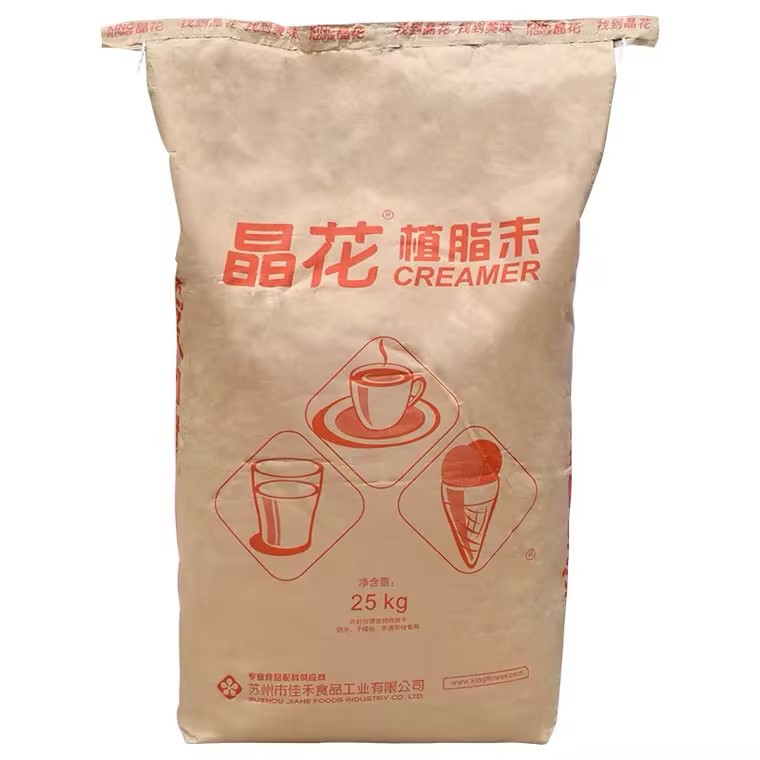
Model-level documentation begins with the packaging format that the certificate and the purchase order both have to name.
A compliance file is a mapping exercise, not a folder
Four questions decide whether a file is complete, and each maps to a different document type.
- Identity. Which model, which packaging format, which batch or production date? This is answered by the specification sheet and the certificate scope line, not by a catalogue page.
- Composition. What is declared in the ingredient list, and does it match the specification? Sodium caseinate, for example, is a protein obtained from milk; its presence or absence changes what the product may be called and how it must be labelled.
- Authorization. Which body issued the document, for which legal entity and site, with which validity dates? A company-level system certificate and a product-scoped certificate are not interchangeable.
- Acceptance. What will the buyer test, against which limit, using which method, and what happens if the result falls outside it? This is answered by the purchasing terms, not by the certificate.
A folder answers "what do you have?". A file answers "what does this prove for this order?". The difference shows up at the two ends of the document set: the certificate scope line, which is usually either too broad or too narrow, and the acceptance clause, which is usually missing altogether.
What changes between research and evaluation
At research stage the question is which constraint applies at all: does this market require a kosher document, a vegan statement, a facility registration reference, or only a specification and a label check? The answer decides which models are even candidates.
At evaluation stage the question changes to whether a specific supplier's document set closes that constraint for the specific order. That is a narrower test, and it is the point at which vague entries such as "certified" or "food safe" stop being useful. Every line in the file should survive the question: which document, which model, which date?
How dry creamer is regulated, classified and purchased
Non-dairy creamer is generally described as a lactose-free liquid or granular substitute for milk or cream, used mainly in hot beverages; instant powder performance depends on process steps such as emulsification, spray drying and agglomeration. Those process facts explain why two powders with similar fat levels can behave differently in a cup, and why a specification sheet is not interchangeable between models.
Three external anchors are useful when the file crosses borders.
Purchasing specification. The USDA Agricultural Marketing Service maintains a Commercial Item Description covering dry, non-dairy creamer packed in commercially acceptable containers and suitable for use by Federal, State and local government buyers. The identifier appears as AA-20043D in the source document filename and should be confirmed against the live document before it is cited in a tender response. Its value to a commercial buyer is structural: it shows that dry creamer can be bought against a written item description rather than a brand name.
Tariff classification. U.S. Customs and Border Protection classified imported non-dairy coffee creamer from China under HTS subheading 2106.90.9975, in ruling NY L85571 as reproduced in a third-party database, so the underlying ruling should be confirmed. Classification is product-specific and drives duty and import paperwork; it should not be copied from a similar product without a customs check.
Industry classification. Food manufacturing, including creamer production, sits under NAICS subsector 311, which covers establishments that transform agricultural and livestock products into intermediate or final products. This matters mainly for tender documents and statistical filings.
None of these anchors certifies a product. They define the paperwork environment in which a model-level file has to work, and they explain why a supplier's answer to "is it compliant?" has to be broken into documents rather than answered with a single word.
What each model actually documents
Kosher K80: a batch-scoped certificate
K80 is presented as a kosher product with fat 32.0 g/100 g and protein 2.5 g/100 g, formulated from glucose syrup, hydrogenated vegetable oil, sodium caseinate, emulsifier, stabilizer and anti-caking agent, and positioned for beverage, dessert, milk tea and coffee use.
The kosher certificate on file, KC#529705-1, was issued by KOSHER AUSTRALIA PTY LTD on 2026-03-22 and expires 2027-04-01. Its scope is narrow and specific: non-dairy creamer model K80 in 25 kg packaging, batch JW26558, production date 2026-03-11, assessed against Australian and international kosher dietary compliance standards.
That scope line is the most useful sentence in the file and also the most frequently over-read. It supports a kosher statement for that batch of that model. It does not support a kosher statement for S35, for 60A, or for a later K80 batch without a matching document.
Vegan S35: a formulation statement, not yet a certificate
S35 is presented as a vegan non-dairy creamer: fat 35.0 g/100 g, trans fat 0 g, protein 0 g, made from glucose syrup, hydrogenated vegetable oil, emulsifier, oxidized hydroxypropyl starch and anti-caking agent. Listed applications include vegetarian products, alcoholic beverages, milk tea, coffee and baking.
Two facts in that record do real work. Protein is declared at 0 g/100 g, and the material list contains no sodium caseinate — the milk-derived protein that appears in K80 and 60A. Together they support the formulation logic behind a vegan positioning, and they distinguish S35 from the other two models on a basis a buyer can check line by line.
They do not, by themselves, constitute a vegan certificate. A vegan claim rests on the full ingredient and processing statement plus whatever verification the destination market or the buyer's own specification requires, and that verification has to be issued for the model and site in question. For an evaluation-stage file, the accurate entry is: formulation supports vegan positioning; model-scoped vegan certificate to be requested.
High-fat 60A: the China-supply model with a 0 g trans fat declaration
60A is the high-fat model: fat 60.0 g/100 g, protein 3.0 g/100 g, trans fat 0 g/100 g, made from hydrogenated vegetable oil, glucose syrup, sodium caseinate, emulsifier and stabilizer, with applications in beverage, dessert, baking and animal feed.
For a file built around China-based supply, 60A is the model that tests whether a specification is written tightly enough, because a high fat inclusion is exactly where a delivered lot can drift without breaching a loosely worded order. The declared values only become enforceable once a tolerance band and a sampling point are attached to them.
A supplied customer record describes an animal feed production plant in Singapore using the high-fat product at 4,000–5,000 mt per year over three years, with consistent quality and competitive pricing cited as the reported outcome. That is a company-reported case, not an independent test result, and it belongs in the file as application evidence rather than as proof of capacity or of any measured performance figure.
Ingredient declarations: the check that decides most files
The ingredient declaration changes what a product may legally be called, and it is where "non-dairy" is most often misread. In trade use, non-dairy creamer describes a substitute for dairy cream; it does not automatically mean the powder is free of milk-derived material.
K80 and 60A both list sodium caseinate. S35 does not. For a buyer, the consequence is practical rather than semantic:
- Where the destination labelling regime requires a milk allergen declaration, the two caseinate-containing models need that declaration placed and checked, while S35 sits outside that particular requirement on its declared materials.
- Where a product claim depends on being free of milk-derived protein, only S35 has the formulation record to support further review — and a supplier statement or certificate should still confirm it.
- Where a supplier substitutes one model for another during a shortage, the ingredient declaration changes with it. The purchase order should say so explicitly rather than relying on a verbal assurance.
The same discipline applies to the emulsifier, stabilizer and anti-caking agent entries. The model records declare these by function rather than by individual name, so a buyer who needs named additives for a destination filing has to request the named declaration instead of inferring it from the function list.
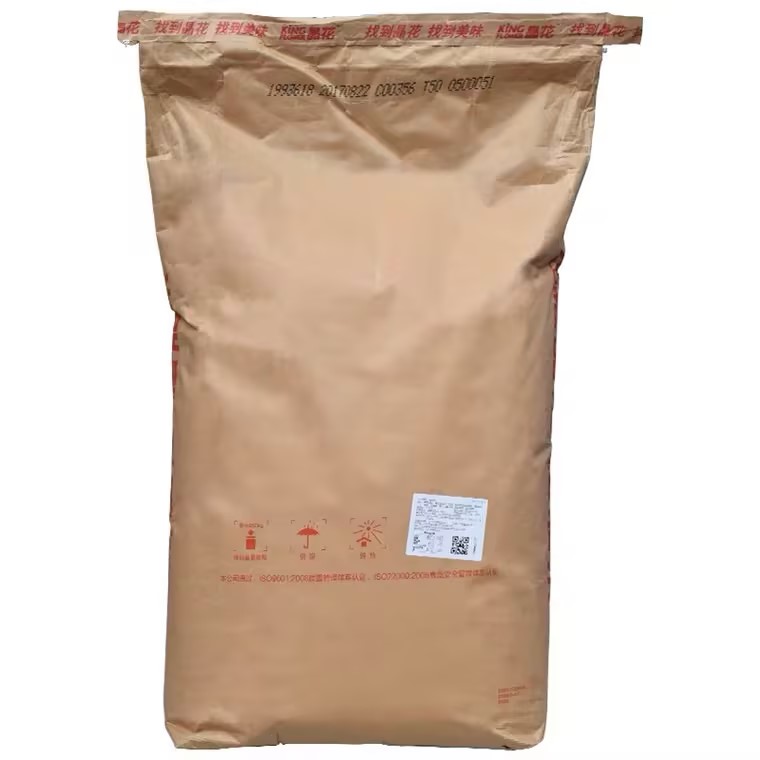
The declaration panel is where a file either matches the specification or quietly contradicts it.
Nutrition parameters: which numbers belong in acceptance criteria
Nutrition values only work as acceptance criteria when three things travel with them: the basis, the model and the limit type. All values referenced here are declared per 100 g, which is not the same as per serving. Mixing the two is one of the quietest ways to produce a file that looks complete and fails review.
| Model | Fat (g/100 g) | Protein (g/100 g) | Trans fat (g/100 g) | Moisture | Declaration note |
|---|---|---|---|---|---|
| Kosher K80 | 32.0 | 2.5 | Not stated in model record | Not stated in model record | Sodium caseinate listed; kosher certificate KC#529705-1, batch JW26558 |
| S35 (Vegan) | 35.0 | 0 | 0 | Not stated in model record | No sodium caseinate; oxidized hydroxypropyl starch |
| 60A (High fat) | 60.0 | 3.0 | 0 | Not stated in model record | Sodium caseinate listed; applications include animal feed |
| Cold-soluble creamer | 32.0 | 3.5 | Not stated in model record | ≤5.0 g/100 g | Refined vegetable oil base |
| C960 (Whipping cream) | 60.0 | 5.2 | Not stated in model record | ≤6.0 g/100 g | Carbohydrate 28.8 g/100 g |
Three patterns in that table matter more than any single number.
Trans fat is a per-model statement, not a category claim. S35, 60A, FC22 and K60 declare 0 g trans fat per 100 g. The model records for K80, C960 and the cold-soluble creamer do not carry a trans fat value. A file that presents "0 g trans fat" as a company-wide property of every creamer is therefore overstating, and a purchase order that requires 0 g trans fat on K80 without a supporting declaration is asking for something the current record does not show.
Moisture limits sit in two bands, and only for some models. The cold-soluble creamer and K60 carry ≤5.0 g/100 g; C960 and the foaming FC22 carry ≤6.0 g/100 g. K80, S35 and 60A do not carry a stated moisture limit in their model records. Where the sheet is silent, write the limit and the test method into the purchasing terms rather than borrowing a number from a neighbouring model. A borrowed limit creates a rejection argument later that neither party can settle on the documents.
Fat and protein describe application, not quality ranking. Fat at 22.0, 32.0, 35.0 and 60.0 g/100 g, and protein at 0, 2.5, 3.0, 5.2 and 7.2 g/100 g, mark different functional positions: foaming and whipping behaviour, whitening strength, mouthfeel contribution in milk tea, and the economics of a high-fat inclusion rate. The purchase order should carry a tolerance band around each declared value, because a bare target with no tolerance is not a testable clause.
Certificate scope, version and expiry: the three-field test
| Document | Issuing body | Scope stated | Issue date | Expiry |
|---|---|---|---|---|
| Kosher certificate KC#529705-1 | KOSHER AUSTRALIA PTY LTD | Model K80, 25 kg, batch JW26558 | 2026-03-22 | 2027-04-01 |
| ISO 9001:2015, 00125Q32624R1M/3200 | CQC | Quality management system, Nantong Jiazhiwei Food Co., Ltd. | 2025-04-24 | 2028-05-04 |
| FSSC 22000, 162006008 | Intertek Certification Limited | Food safety management system, Nantong Jiazhiwei Food Co., Ltd. | 2025-07-03 | 2026-06-17 |
| U.S. FDA Food Facility Registration, 13348058524 | Registrar Corp | Food facility registration, Nantong Jiazhiwei Food Co., Ltd. | 2025-08-19 | 2026-12-31 |
Every row should be read with three fields in mind: scope, issuing version and expiry relative to the shipment date.
Scope. The ISO 9001:2015 certificate, the FSSC 22000 certificate and the U.S. FDA Food Facility Registration are all scoped to Nantong Jiazhiwei Food Co., Ltd. as the legal entity and site. A buyer ordering from a different Jiahe site should confirm which entity and which site the certificate covers, because a group-level assurance is not a site-level certificate.
Version and expiry. The FSSC 22000 copy recorded here states an expiry of 2026-06-17, while the ISO 9001:2015 certificate runs to 2028-05-04 and the FDA facility registration to 2026-12-31. A file assembled now, for a shipment after mid-2026, has to carry the current FSSC issue rather than this copy. Reading expiry dates first is faster than discovering the gap during a customer audit.
Document type. The FDA document is a food facility registration certificate. It records the registration of a facility under U.S. food law; it is not a product approval, not a nutritional endorsement, and not a substitute for a destination-market label review. The same discipline applies to company-level certification: Jiahe's company profile lists HALAL among the food safety and quality systems it has passed, but an importer's file needs the product- and model-scoped certificate before that word is placed next to a model name.

The certificate names an entity and a site; the factory image and the document should point to the same location.
Step-by-step: assembling the file before shipment
- Lock the model identity and packaging. Write the model code and pack format exactly as they appear on the certificate scope — for K80, "non-dairy creamer model K80 (25 kg)". Model codes are not synonyms; substituting a code changes the document trail.
- Attach the model specification and record the basis. Fat, protein, trans fat and moisture, each with its unit and its per-100 g basis. Where a value is absent, record the absence as an open item rather than a blank cell.
- Check the ingredient declaration against the specification. Flag milk-derived inputs such as sodium caseinate and confirm whether the declared additive functions are enough for the destination filing. If named additives are required, request them.
- Collect certificates and apply the three-field test. Scope, version, expiry — and note the legal entity and site printed on each document.
- Map to destination requirements. For U.S.-bound shipments, align the facility registration reference, the customs classification and the label review. For kosher or vegan positioning, attach the model-scoped certificate or mark it as outstanding.
- Convert the numbers into acceptance criteria. Specify parameter, limit, tolerance, method, sampling point and remedy. "Moisture ≤5.0 g/100 g by the agreed method on the retained sample" is a clause; "moisture low" is not.
- Run the release checklist before the container is sealed. Model, pack, batch, certificate copies, specification version, signed acceptance criteria and retained-sample reference on a single page.
Steps two, three and six are the ones that are skipped most often, and they are the ones that decide whether a dispute is settled by documents or by negotiation.

Application context decides which parameters carry commercial weight in the acceptance criteria.
Where the file is used: three buyer situations
Beverage and milk tea importers with a kosher requirement. The decision is usually between K80 and S35 rather than between quality levels. K80 brings a batch-scoped kosher certificate with 32.0 g/100 g fat and 2.5 g/100 g protein; S35 brings 0 g protein, no sodium caseinate and 0 g trans fat, but requires a vegan document request. The file should state which constraint is decisive, because the two models cannot be swapped without changing both the certificate and the ingredient declaration.
Vegan product developers. S35 is the model whose material list and 0 g protein declaration support the claim under consideration. Its listed applications include alcoholic beverages alongside milk tea, coffee and baking, which matters because one powder may be filed under more than one product category, and each category can carry a different labelling obligation.
High-fat buyers sourcing from a China-based plant. 60A, at 60.0 g/100 g fat, 3.0 g/100 g protein and a declared 0 g/100 g trans fat, is the model where a tolerance band and a sampling clause earn their place. The Singapore animal-feed case record belongs here as application evidence, with its reported outcome kept in attributed form rather than generalised into a promise.
Frequently asked questions
Does the K80 kosher certificate cover other models or later batches?
No. Certificate KC#529705-1, issued by KOSHER AUSTRALIA PTY LTD on 2026-03-22 and valid to 2027-04-01, names non-dairy creamer model K80 in 25 kg packaging, batch JW26558, production date 2026-03-11. It is evidence for that scope only. A different batch, a different pack format or a different model needs a matching document, so the purchase order should require the certificate copy for the batch actually being shipped.
Is S35 a certified vegan product, or only formulated as one?
The model record supports vegan positioning on formulation: protein is declared at 0 g/100 g and the material list contains no sodium caseinate, unlike K80 and 60A. That is a formulation statement, not a vegan certificate. Buyers who need certification behind a label claim should request a model-scoped vegan document and record it as outstanding until it is issued.
Can the creamer be customized, and at what capacity?
Cograin offers OEM/ODM and customized production covering creamer formula, packaging specification, product flavour and syrup DE value, with monthly creamer capacity stated at 16,700 tons. Quality control is described as full-process inspection with 100% metal and weight check plus third-party testing, and after-sales support covers technical guidance, quality tracking and customization adjustment.
How should price and MOQ be recorded in the file?
Price is not a fixed attribute of a model; it is quoted against model, packaging format, volume and destination, and MOQ is stated as negotiable and dependent on product type and packaging. The correct file entry is the quoted basis — model, pack, volume, Incoterm and quote validity — so that a later order is compared like for like rather than against a remembered figure.
What sample and documents should be requested before the first shipment?
Request a sample of the exact model and pack you intend to order, the specification sheet showing fat, protein, trans fat and moisture with the per-100 g basis, the ingredient declaration, and the model-scoped certificate copies. Then run a small application trial in your own process and write the observed result into the acceptance criteria, so the first bulk delivery is judged against something you have already measured rather than against a supplier description.
What lead time applies after order confirmation?
Lead time is stated as around 7–15 working days after order confirmation. Because certificate copies, specification versions and label approvals all have to be in place before dispatch, the file should be finalised in parallel with production rather than after it. If a model needs a certificate that is not yet in hand, treat that as a schedule item: the K80 kosher certificate runs to 2027-04-01, but a later batch may still require its own copy. To start that process, request a sample together with the current document set for the model you intend to buy.
Conclusion
A compliance file is judged by traceability, not thickness. Three checks do most of the work: does the certificate name the model, pack and batch on the order; does the ingredient declaration match the specification, including milk-derived inputs; and does the purchase order state a limit, a tolerance and a method for every parameter the buyer intends to enforce.
Applied to this range, that produces a clean division of labour. K80 carries a batch-scoped kosher certificate valid to 2027-04-01 and a 32.0 g/100 g fat specification with a declared 2.5 g/100 g protein. S35 carries a vegan formulation at 0 g protein and 0 g trans fat, with no sodium caseinate, pending a model-scoped vegan document. 60A carries a 60.0 g/100 g fat specification and a declared 0 g trans fat, and needs its acceptance tolerances written out explicitly because that is where lot-to-lot drift is hardest to see.
Where a document is missing, the file should say so plainly. An honest open item usually closes faster than an overstated claim, and it keeps the word "compliant" attached to something a buyer can actually verify.
For the wider product overview, the 2025 Cograin brochure is available to download: 2025 Cograin Brochure (PDF).
Have Questions or Need More Details?
Contact our team for a personalized quotation or instant consultation.
Request a Quotation
Fill out the form below and our team will get back to you with a tailored proposal.
WhatsApp Direct Chat
Prefer to chat in real-time? Message us on WhatsApp for instant assistance & quick answers.
- Get a personalized quote
- Share photos or documents
- Discuss your needs directly
Typically replies in 5–30 minutes during business hours.