
Non-Dairy Creamer for Coffee, Bakery or Beverage: FC22, S35, C960, 60A

Choosing a non-dairy creamer for a coffee, bakery or beverage project is a process-matching decision. In Cograin's portfolio, FC22 (Foaming) is the foaming creamer, S35 (Vegan) is the vegan creamer, C960 is the whipping creamer, and 60A is the high-fat creamer. A separate cold-soluble creamer covers cold instant coffee, milk tea and beverage use. The four named models are not interchangeable: their stated fat, protein, moisture and material lists differ, and their listed applications overlap only in part.
Short answer: choose FC22 when foam is part of the coffee or milk-tea serve; choose S35 when the formula must be vegan and the application is vegetarian products, alcoholic beverages, milk tea, coffee or baking; choose C960 when whipping functionality is needed in bakery or beverages; choose 60A when a 60% fat creamer is needed for beverage, dessert, baking or animal feed. For cold-water instant drinks, evaluate the separate cold-soluble creamer. Confirm every choice with a sample and current specification sheet.
Cograin is the brand used by Jiahe Foods Industry Co., Ltd., a China-based food-ingredient manufacturer founded in 2001 and listed on the Shanghai Stock Exchange main board in 2021 under stock code 605300. The company operates three production bases and five factories in Suzhou, Nantong and Singapore, with annual production capacity above 300,000 tons, and it has passed ISO9001, FSSC22000, HACCP, HALAL, ISO14000 and OHSAS18000 system certifications. These facts describe the supplier; they do not replace model-level samples or certificates.
Why model mapping matters
A non-dairy creamer is often described as a lactose-free liquid or granular substitute for milk or cream in hot beverages. GEA's technology description uses that broad definition, and it is useful for category understanding. It does not tell a bakery project whether a creamer will whip, or a beverage line whether it will disperse in cold water. The model name and stated parameters are the first filter. The second filter is the actual process: hot or cold, foamed or whipped, neutral or alcoholic, human food or animal feed. The third filter is documentation: material list, allergen and vegan status, certificate scope, moisture, fat, protein and trans fat. Skipping the second or third filter turns a specification sheet into a guess.
Non-dairy creamer production can use emulsification, spray drying and agglomeration to make highly dispersible instant powders, according to GEA's process description. That process view explains why two creamers with similar fat levels can behave differently in a cup or a mixing bowl. Published supplier application pages describe non-dairy creamer use across beverages, bakery, snacks, desserts and food manufacturing. Those are application claims, not measured performance in a specific formula. For a buyer, the practical lesson is to match the model to the intended function and then verify the function in a bench trial.
Cograin's portfolio follows this application logic: it lists separate models for foaming, whipping, vegan, high-fat, cold-soluble, kosher and other uses. This guide stays with four models named in the brief: FC22, S35, C960 and 60A. It treats the cold-soluble creamer as a separate reference because it is a different model, not a fourth grade of the same powder.
Model-by-model application map
| Model | Type | Stated fat | Stated protein | Stated moisture | Stated trans fat | Listed applications |
|---|---|---|---|---|---|---|
| FC22 (Foaming) | Foaming creamer | 22.0 g/100 g | 7.2 g/100 g | ≤6.0 (stated) | 0 g/100 g | Milk tea, coffee, baking |
| S35 (Vegan) | Vegan non-dairy creamer | 35.0 g/100 g | 0 g | Not stated | 0 g | Vegetarian products, alcoholic beverages, milk tea, coffee, baking |
| C960 | Whipping creamer | 60.0 g/100 g | 5.2 g/100 g | ≤6.0/100 g | Not stated | Baking, beverage |
| 60A | High-fat | 60.0 g/100 g | 3.0/100 g | Not stated | 0/100 g | Beverage, dessert, baking, animal feed |
| Cold-soluble creamer | Cold-soluble creamer | 32.0 g/100 g | 3.5 g/100 g | ≤5.0 g/100 g | Not stated | Coffee, milk tea, beverage |
Not stated means the supplied data does not give a value. It is not a claim that the value is zero. Compare only like-for-like values, and ask for the current certificate of analysis and specification sheet for the exact model and production site.
FC22 (Foaming): coffee and milk-tea foam, plus bakery use
FC22 (Foaming) is the foaming creamer in this set. Its stated values are 22.0 g/100 g fat, 7.2 g/100 g protein, 0 g/100 g trans fat and moisture ≤6.0. Its material list is glucose syrup, hydrogenated vegetable oil, milk powder, emulsifier, stabilizer, salt and flavoring. The listed applications are milk tea, coffee and baking.
For coffee and milk tea, the foaming classification points to serves where foam is visible and part of the drinking experience, such as cappuccino-style beverages. For bakery, the model is listed for bakery use, but the supplied data does not give a baking dosage, whipping time or crumb result. A bakery buyer should therefore treat FC22 as a candidate for a trial, not as a proven replacement for a whipping creamer. The 22% fat level and 7.2% protein also distinguish it from the two 60% fat models below; do not substitute by fat number alone.
S35 (Vegan): vegan formulation, alcoholic beverages and baking
S35 (Vegan) is listed as a vegan non-dairy creamer. Its stated values are 35.0 g/100 g fat, 0 g protein and 0 g trans fat. The material list is glucose syrup, hydrogenated vegetable oil, emulsifier, oxidized hydroxypropyl starch and anti-caking agent; it does not list milk powder or sodium caseinate. That composition is relevant to vegetarian and vegan product development, but it is not by itself a vegan certificate. Buyers should request the certificate that applies to the production site and the finished market.
The listed applications are vegetarian products, alcoholic beverages, milk tea, coffee and baking. The alcoholic-beverage listing is an application statement, not evidence of ethanol stability or acid resistance; those points need a trial in the actual drink base. For milk tea, coffee and baking, S35 gives formulators a vegan option with 35% fat and no stated protein, which can matter when the dairy note is not wanted. Again, confirm taste, dispersion and stability in your own recipe.
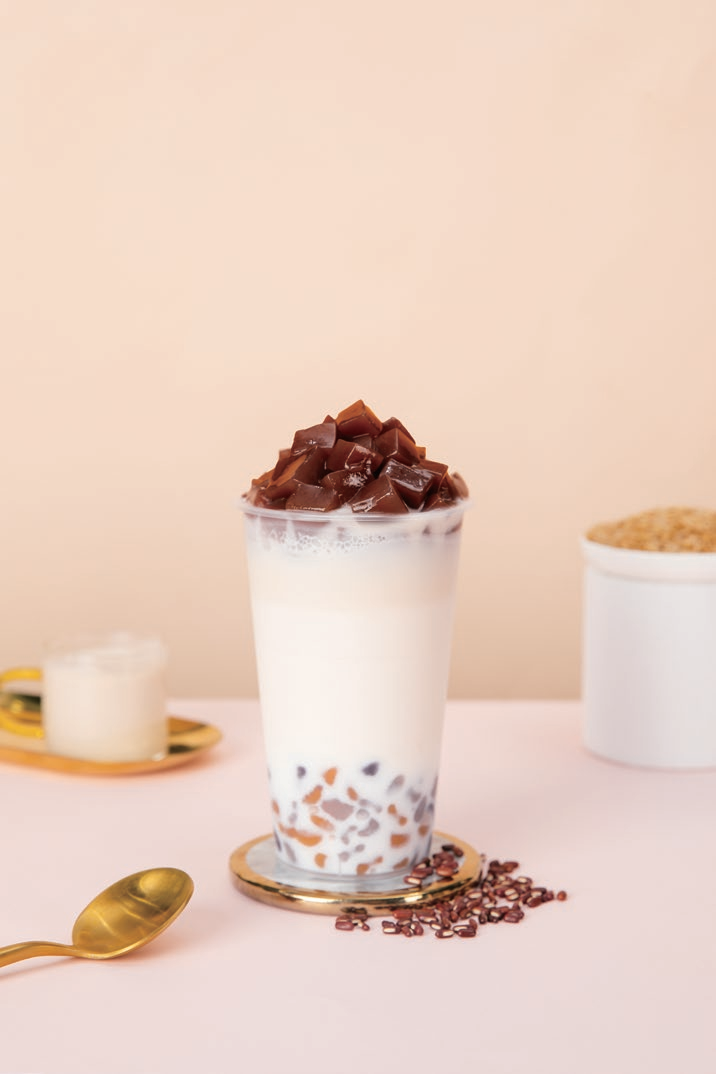
C960: whipping creamer for bakery and beverages
C960 is the whipping creamer in this comparison. Its stated values are 60.0 g/100 g fat, 5.2 g/100 g protein, 28.8 g/100 g carbohydrate and moisture ≤6.0/100 g. The material list includes glucose syrup, hydrogenated vegetable oil, emulsifier, sodium caseinate, stabilizer and salt. The listed applications are baking and beverage.
The presence of sodium caseinate means C960 should not be assumed vegan or dairy-free; buyers with a milk-protein restriction need to check the material and allergen documents. For bakery, C960's whipping classification is the relevant starting point; for beverages, the 60% fat level and protein content make it a different proposition from FC22's 22% fat foaming profile. The supplied data does not state a whip time, overrun or freeze–thaw result, so a bench test is still required. Use the model name to shortlist, not to certify a finished dessert.
60A: high-fat creamer for beverage, dessert, baking and animal feed
60A is a high-fat creamer with 60.0 g/100 g fat, 3.0/100 g protein and 0/100 g trans fat. Its material list is hydrogenated vegetable oil, glucose syrup, sodium caseinate, emulsifier and stabilizer. The listed applications are beverage, dessert, baking and animal feed. In the China-based supply context, 60A is one of the high-fat options in Cograin's portfolio; destination requirements, label language and import documents still need to be confirmed for each order.
The animal-feed listing is unusual in a guide focused on coffee and bakery, but it is part of the supplied product scope. Cograin's case record for an animal-feed production plant in Singapore covers 4,000–5,000 mt/year over three years and cites a high-fat product, with quality consistency and pricing given as the result. The case relates both 60A and kosher K80, so the record supports high-fat feed use but does not prove that every ton was 60A. For beverage and dessert use, 60A's 60% fat and 3.0% protein are the main stated differences from FC22 and S35.
Cold-soluble creamer: separate model for cold instant drinks
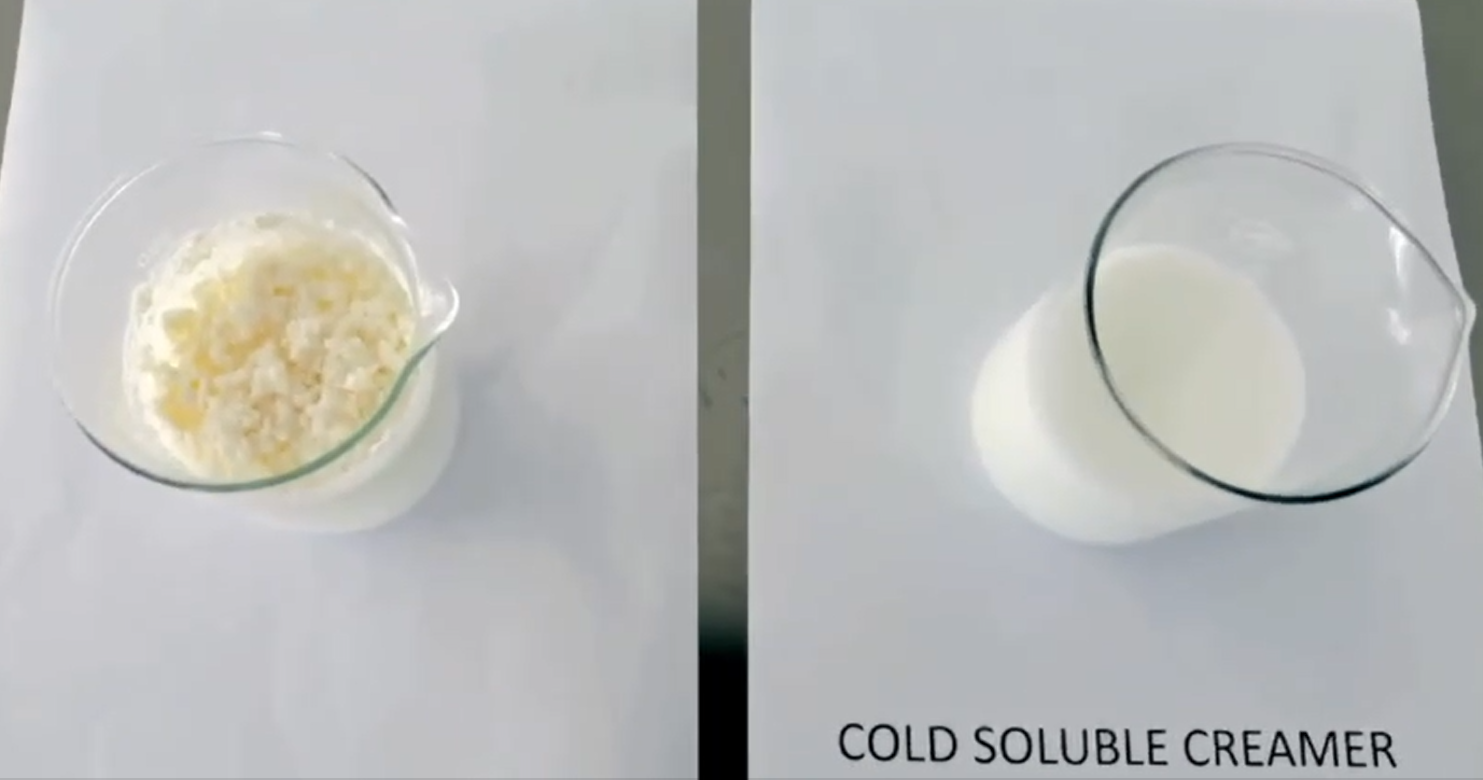
The cold-soluble creamer is not one of the four models above. It is a separate product listed for coffee, milk tea and beverage use, with 32.0 g/100 g fat, 3.5 g/100 g protein and moisture ≤5.0 g/100 g. Its material list is glucose syrup, refined vegetable oil, sodium caseinate, emulsifier, stabilizer and anti-caking agent.
Cold-soluble instant dissolution is a process requirement: the powder must disperse in the water temperature and agitation available on the line. The supplied data gives the model classification and composition, not a measured dissolution time. If your beverage is served cold or mixed without steam, evaluate this model separately rather than assuming FC22, S35, C960 or 60A will dissolve the same way. If your process is hot coffee or a steamed milk tea, the foaming, whipping or high-fat models should be evaluated for their own functions.
Step-by-step selection and acceptance path
The fastest way to reduce rework is to shortlist by function, then prove the shortlist with a sample. The steps below keep the decision tied to the actual process rather than to a generic creamer description.
- Define the process before the product. State whether the creamer is used in hot coffee, iced coffee, milk tea, a whipping application, a bakery batter, an alcoholic beverage or animal feed. Note the water temperature, agitation, pH or alcohol exposure where relevant, and the expected foam or whip structure. This step prevents a cold-soluble requirement from being assigned to a hot-fill model, or a whipping requirement from being assigned to a foaming model.
- Shortlist by listed application. FC22 is listed for milk tea, coffee and baking. S35 is listed for vegetarian products, alcoholic beverages, milk tea, coffee and baking. C960 is listed for baking and beverage. 60A is listed for beverage, dessert, baking and animal feed. The cold-soluble creamer is listed for coffee, milk tea and beverage. A model outside the list should not be forced into the application without a specific trial plan.
- Check the material list against the claim. S35's material list does not include milk powder or sodium caseinate, which is relevant to vegan formulation. C960 and 60A list sodium caseinate, so they should not be assumed dairy-free. FC22 lists milk powder. These are formulation facts; the certificate and allergen statement still need to match the exact production site and market.
- Compare the stated parameters that affect your process. Fat, protein, moisture and trans fat are not a complete performance specification, but they are a useful first screen. FC22's 22% fat and 7.2% protein are a different starting point from C960 and 60A at 60% fat. S35's 0 g protein and 35% fat suit a different formulation space. The cold-soluble model's 32% fat and 3.5% protein sit between the foaming and high-fat models on fat, but its cold-solubility classification is the deciding difference.
- Run a bench or pilot trial in the real matrix. Test the model in the actual coffee, tea, batter, dessert or feed mix. Record dose, water temperature, mixing time, foam height or whip structure, texture, taste and any separation. The supplied data does not provide a universal dosage or a guaranteed result, so the trial is the evidence that matters for your line.
- Verify documents and commercial terms. Ask for the current specification sheet, certificate of analysis, allergen statement and the certificate scope that applies to your market. Confirm packaging, MOQ, lead time and after-sales support. Cograin lists OEM/ODM customization for creamer formula, packaging and flavor; monthly creamer capacity of 16,700 tons; lead time of around 7–15 working days after order confirmation; negotiable MOQ; full-process inspection, 100% metal and weight check, and third-party testing.
Use cases by application
Coffee and milk tea
For a foamed cappuccino-style coffee or a milk tea where foam is part of the serve, FC22 is the first model to evaluate because it is the foaming creamer. For a vegan coffee or milk tea, S35 is the listed vegan option, with the caveat that vegan status must be documented. For a richer beverage body without a foam requirement, C960 and 60A are listed for beverage use, but their 60% fat and sodium caseinate content must fit the label and taste target. For iced or cold-mixed drinks, the separate cold-soluble creamer is the relevant model. The bubble-tea and coffee-shop application scenario in the supplied data also lists food-safety compliance, no trans-fatty acids and available halal or kosher certification as project requirements; treat those as checks to verify at model level, not as automatic properties of every creamer.
Bakery
Bakery is the broadest overlap in this set: FC22, S35, C960 and 60A are all listed for baking. That does not make them interchangeable. C960 is the whipping creamer, so it is the natural candidate where a whipped structure is part of the product. FC22 is a foaming creamer listed for baking, which may suit a different aerated or topping role, but the supplied data gives no baking-specific dosage. S35 gives a vegan bakery option with 35% fat and no stated protein. 60A gives a 60% fat high-fat option for bakery and dessert. The correct choice depends on whether the bakery project needs foam, whip, vegan positioning, high fat or a combination.
Beverages, desserts and alcoholic beverages
C960 and 60A are both listed for beverage use, with 60% fat; C960 also lists carbohydrate at 28.8 g/100 g and protein at 5.2 g/100 g, while 60A lists protein at 3.0/100 g. 60A extends into dessert and animal feed. S35 is the model listed for alcoholic beverages, but the supplied data does not state ethanol stability or acid resistance. A beverage factory should therefore trial S35 in the actual alcoholic base and check clarity, separation and taste before commitment. For cold instant beverages, use the separate cold-soluble creamer, not a hot-fill model.
Animal feed and vegetarian products
60A is the high-fat model listed for animal feed, supported by Cograin's animal-feed case record from Singapore. S35 is the vegan model listed for vegetarian products. These two uses sit at opposite ends of the portfolio and should not be merged into a single sourcing decision. Feed buyers should confirm the feed-grade documentation, packaging and destination requirements for 60A. Vegetarian-product buyers should confirm the vegan certificate and allergen statement for S35.
Acceptance checks before you commit
The specification sheet is the start of acceptance, not the end. For these four models plus the cold-soluble reference, the practical check is a small set of documents and trials that match the application.
- Moisture: confirm the stated value and the test method. FC22 states moisture ≤6.0; C960 states ≤6.0/100 g; the cold-soluble creamer states ≤5.0 g/100 g. S35 and 60A do not state moisture in the supplied data, so ask for the current specification.
- Fat and protein: compare on the same unit basis. FC22 is 22.0 g/100 g fat and 7.2 g/100 g protein; S35 is 35.0 g/100 g fat and 0 g protein; C960 is 60.0 g/100 g fat and 5.2 g/100 g protein; 60A is 60.0 g/100 g fat and 3.0/100 g protein; the cold-soluble creamer is 32.0 g/100 g fat and 3.5 g/100 g protein.
- Trans fat: FC22 states 0 g/100 g, S35 states 0 g and 60A states 0/100 g. C960 and the cold-soluble creamer do not state a trans fat value in the supplied data. Do not treat a missing value as zero.
- Material and allergen status: check milk powder and sodium caseinate where a vegan or dairy-free claim is needed. S35's material list does not include either; C960 and 60A list sodium caseinate; FC22 lists milk powder. Match the certificate to the exact model and site.
- Certificate scope: company-level HALAL certification and system certifications such as ISO9001, FSSC22000 and HACCP do not automatically certify every product for every market. Ask for the product-specific certificate and the scope that covers your destination.
- Sample trial: test dose, dispersion, foam or whip, texture, taste and stability in the real matrix. A sample that performs in water may not perform in coffee, an alcoholic drink or a bakery batter.
- Commercial terms: confirm packaging, MOQ, lead time and after-sales support in writing. Cograin lists negotiable MOQ, around 7–15 working days after order confirmation, OEM/ODM customization, technical guidance and quality tracking.
Cograin's published compliance information also lists U.S. FDA Food Facility Registration no. 13348058524 valid through 2026. That is a facility registration, not a product certification, so it should be checked alongside the product-level documents your market requires.
FAQ
Which non-dairy creamer should I use for coffee and milk tea?
For coffee and milk tea where foam is part of the serve, FC22 (Foaming) is the listed foaming creamer, with 22.0 g/100 g fat and 7.2 g/100 g protein. For a vegan coffee or milk tea, S35 (Vegan) is the listed vegan option, with 35.0 g/100 g fat, 0 g protein and no milk powder or sodium caseinate in its material list. C960 and 60A are listed for beverage use and can be evaluated where a 60% fat creamer fits the taste and label. For cold-mixed drinks, use the separate cold-soluble creamer. The final choice needs a trial in the actual drink.
Which model is suitable for bakery projects?
FC22, S35, C960 and 60A are all listed for baking, but they serve different functions. C960 is the whipping creamer and is the first candidate where a whipped structure is needed. FC22 is a foaming creamer listed for baking, but no baking-specific dosage is supplied. S35 gives a vegan bakery option with 35% fat and 0 g protein. 60A gives a 60% fat high-fat option for bakery and dessert. Match the model to the bakery function, then confirm it in a bench trial.
Is S35 suitable for vegan and alcoholic-beverage products?
S35 is listed as a vegan non-dairy creamer, with 35.0 g/100 g fat, 0 g protein and 0 g trans fat. Its material list does not include milk powder or sodium caseinate, which is relevant to vegan formulation. Its listed applications include alcoholic beverages, but the supplied data does not provide ethanol-stability or acid-resistance results. Treat S35 as a candidate for an alcoholic-beverage trial and request the vegan certificate for the exact production site and market.
Can 60A be used in animal feed?
Yes, 60A is listed for animal feed as well as beverage, dessert and baking. It is a high-fat creamer with 60.0 g/100 g fat, 3.0/100 g protein and 0/100 g trans fat. Cograin's case record for an animal-feed production plant in Singapore covers 4,000–5,000 mt/year over three years and cites a high-fat product; the record relates both 60A and kosher K80, so the exact model mix should be confirmed for your order. Feed-grade documentation, packaging and destination requirements still need verification.
What should I check before ordering a sample?
Ask for the current specification sheet, certificate of analysis, allergen statement, vegan or halal or kosher scope where relevant, and the packaging and MOQ terms. Confirm moisture, fat, protein and trans fat on the same unit basis, and note where a value is not stated. Then trial the sample in your real coffee, tea, bakery, beverage or feed matrix. Cograin lists OEM/ODM customization, a monthly creamer capacity of 16,700 tons, a lead time of around 7–15 working days after order confirmation, and after-sales technical guidance. A sample request or current brochure can be the next step before a full commercial order.
Conclusion
The model map is simple once the process is clear. FC22 is the foaming creamer for coffee, milk tea and listed bakery use. S35 is the vegan creamer for vegetarian products, alcoholic beverages, milk tea, coffee and baking, subject to certificate and trial. C960 is the whipping creamer for baking and beverages. 60A is the high-fat creamer for beverage, dessert, baking and animal feed. The cold-soluble creamer is a separate model for cold instant coffee, milk tea and beverages. Use the table to shortlist, the sample to prove the function, and the documents to confirm the claim. That sequence keeps a specification sheet from becoming an unverified promise.
For current model data and commercial terms, review the 2025 Cograin Brochure or contact Cograin through www.cograin.cn. Ask for the exact model, production site, certificate scope and sample quantity before confirming an order.
Have Questions or Need More Details?
Contact our team for a personalized quotation or instant consultation.
Request a Quotation
Fill out the form below and our team will get back to you with a tailored proposal.
WhatsApp Direct Chat
Prefer to chat in real-time? Message us on WhatsApp for instant assistance & quick answers.
- Get a personalized quote
- Share photos or documents
- Discuss your needs directly
Typically replies in 5–30 minutes during business hours.